Ritaro is the shy young protagonist in the book who rarely goes to school or socialises. He recently loses his grandfather and inherits his old bookstore and is met with overwhelming grief. Shortly after, a talking cat called Tiger appears and Ritaro enters four labyrinths where he discovers the ways books have been mistreated. Throughout the book, the wisdom that his grandfather has imparted onto him gives him courage to speak what’s in his heart. ‘Books have tremendous power. But take care. It’s the book that holds the power, not you.’
The adventures he goes on allows him to become more himself while working through grief and making new friends. He convinces those mistreating the books to stop by reminding them the true meaning of books. Near the end of the book, he says ‘Books teach us how to care about others.’ He begins to foster more empathy and compassion and begins to open up more. It’s a book filled with adventure, friendship, hope, courage and wisdom.
Here is a Chinese idiom I recently learned 學無止境 Xué wú zhǐjìng. It means there is no end to learning. There’s always something new to learn and knowledge is boundless. The book by Sōsuke Natsukawa really expresses this sentiment. Books remind us that we are always never-ending learning and there is always something new to discover, understand, improve and learn.
‘Books are filled with human thoughts and feelings. People suffering, people who are sad or happy, laughing with joy. By reading their words and their stories, by experiencing them together, we learn about the hearts and minds of others people besides ourselves. Thanks to books, it’s possible to learn not only about the people around us everyday, but people living in totally different worlds.’
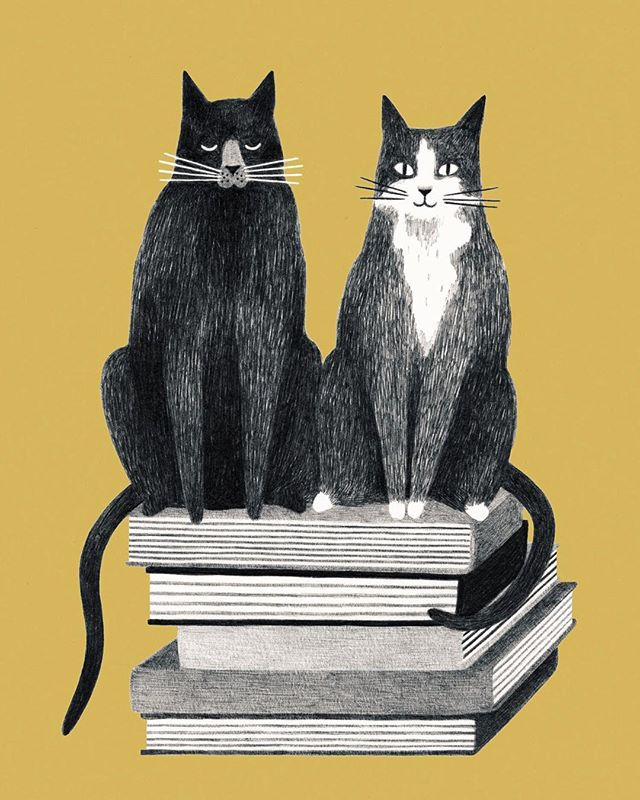
Art by Liekeland
 Tien-Jen