Tien-Jen

  • About
  • Blog
  • Books
  • Culture
  • Daily Thoughts
  • Fashion
  • Personal
  • Contact
  • Portfolio
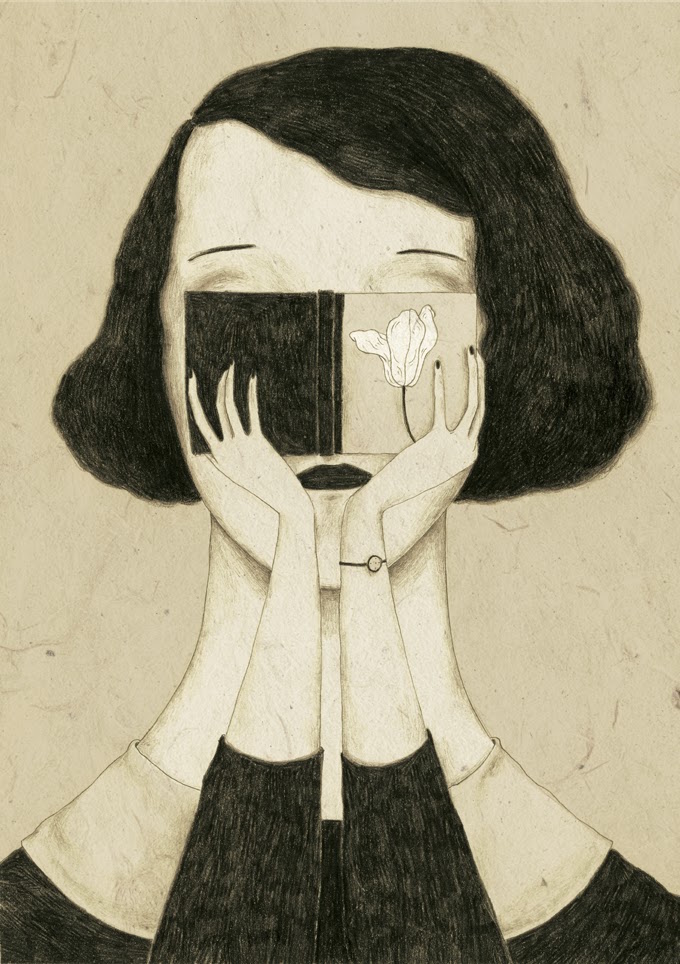
  • The Courage To Be Disliked

    No one is thinking about you, nor are you thinking about them. That’s the magic of it: everyone is focusing on their own lives. I’ve often experienced intense social anxiety, but the reminder that most people are busy preoccupied with themselves is a massive relief. Social anxiety tricks you into believing that people are judging everything you do or say, when in reality, most people aren’t paying much attention. We create the mental chains that hold us back and stop us from living freely and authentically.

    The Courage to Be Disliked by Ichiro Kishimi and Fumitake Koga is a Japanese book that follows a dialogue between a philosopher and a young man. The philosopher draws concepts from Adlerian psychology and explores how we can live more meaningful lives. Most people have a deep desire to be accepted, validated and liked. The book shows that true freedom and content comes from letting go of the need to be liked. When we crave approval, we act in ways that are socially acceptable rather than authentic. The truth is, some people will like us and some won’t, and that’s not in our control.

    Everyone has their own tasks. Everyone is responsible for their own tasks in life. We cannot control or change others, but we can focus on what is within our own power. True change comes from taking ownership of ones own action and mindset. The book shares the serenity prayer: “God, grant me the serenity to accept the things I cannot change, the courage to change the things I can, and the wisdom to know the difference.“

    Everyone is different but equal. Each person has a unique background from their life experiences, culture, upbringing, and personality. This reminded me of something a close friend said to me, that “despite everyone being different, we are more alike than we are different.” At the end of the day, we’re all human, sharing this life, roaming the vast universe together.

    The only moment that exists is the present. The only moment we have is right here, right now. You are not bound by your past or defined by what has happened to you. In every moment, you have the ability to choose. We can often restrict our own growth by dwelling on past traumas, upbringing and memories. Adlerian psychology believes that you can change at any moment. Many people avoid change or taking action because they fear how others might react.

    People are our comrades, not our enemy. No one is against you except for the voice in your mind that convinces you that they are. There is no need to compare yourself to others, feel envy, or believe you are inferior. When we choose to see the good in others, and approach them with trust, it brings a deeper sense of connection and meaning to our lives. No one is beneath you and no one is above you.

    Do not seek recognition. This one was a tricky one to digest, because naturally people are encouraged and motivated by positive feedback and praise. However, if we constantly seek recognition from others, we can’t experience true fulfillment within ourselves. We end up needing validation to fill our cup, when the reality is that we are already worthy just as we are, simply for existing.

    Stop caring what other people think. Caring about what others think limits us from living the life we truly want. When we seek validation from others, we lose touch with our true selves. True freedom is letting go of caring about what other people think. Living for approval traps us in anxiety, expectations and inauthenticity. The book reminds us that “You are not living to satisfy other people’s expectations.” When we care too much what others think, it can lead to inaction and self-doubt.

    All problems are interpersonal problems. The connections we have with people can bring the greatest joy in our lives. However, they can also be the source of much of our suffering. Even in the moments where we’re alone, our mind is making connections with others. We can resolve this by choosing to trust others, cultivate a sense of belonging within a community, taking responsibility for our own actions, and embracing the courage to be disliked, the courage to change and the courage to be happy.

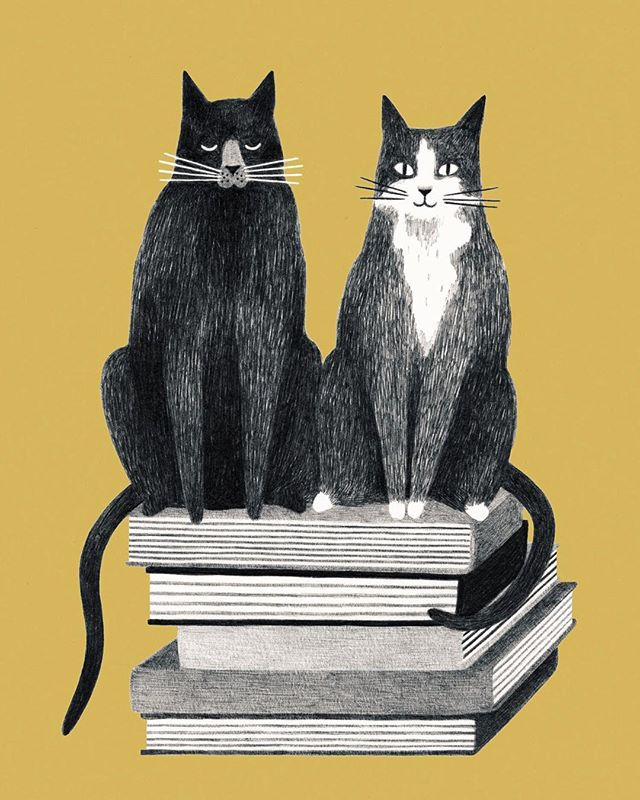
    Art by Kelly Beeman
    July 12, 2025
    Adlerian Psychology, book review, Books, Books, Life, reading, The Courage to be Disliked, writing

  • The Cat Who Saved Books

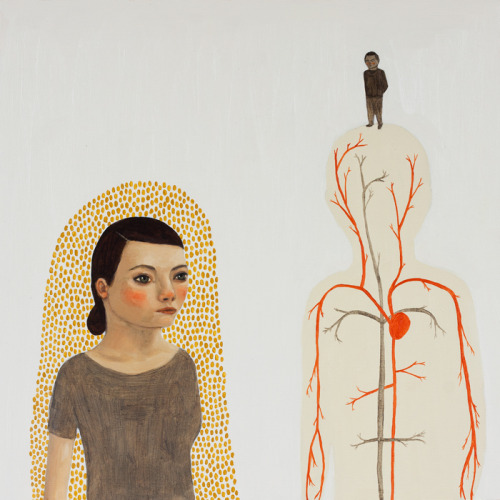
    Ritaro is the shy young protagonist in the book who rarely goes to school or socialises. He recently loses his grandfather and inherits his old bookstore and is met with overwhelming grief. Shortly after, a talking cat called Tiger appears and Ritaro enters four labyrinths where he discovers the ways books have been mistreated. Throughout the book, the wisdom that his grandfather has imparted onto him gives him courage to speak what’s in his heart. ‘Books have tremendous power. But take care. It’s the book that holds the power, not you.’

    The adventures he goes on allows him to become more himself while working through grief and making new friends. He convinces those mistreating the books to stop by reminding them the true meaning of books. Near the end of the book, he says ‘Books teach us how to care about others.’ He begins to foster more empathy and compassion and begins to open up more. It’s a book filled with adventure, friendship, hope, courage and wisdom.

    Here is a Chinese idiom I recently learned 學無止境 Xué wú zhǐjìng. It means there is no end to learning. There’s always something new to learn and knowledge is boundless. The book by Sōsuke Natsukawa really expresses this sentiment. Books remind us that we are always never-ending learning and there is always something new to discover, understand, improve and learn.

    ‘Books are filled with human thoughts and feelings. People suffering, people who are sad or happy, laughing with joy. By reading their words and their stories, by experiencing them together, we learn about the hearts and minds of others people besides ourselves. Thanks to books, it’s possible to learn not only about the people around us everyday, but people living in totally different worlds.’

    Art by Liekeland

    June 1, 2024
    Books, Cat, Sōsuke Natsukawa

  • We Don’t Need A Lot To Be Happy

    When we come into the world we have nothing but ourselves. When we leave this planet we have nothing but ourselves. We already have everything that we need within our body, mind, heart, and soul from the moment we enter the world. We are already enough. The trees don’t ask for so much more than sun and rain, the birds enjoy singing in the early morning hours, and the moon shines happily in the sky at night.

    Much of the unease in life is from feeling that there is a cup to fill within ourselves. The belief stems from what we’re told in the world about not being enough. The idea is that we can only be enough if we are accepted by others. The true joy that comes in this life can only come from within. This is why some people spend a lifetime chasing happiness rather than finding joy within. The more we run away from our fears and problems, the more they continue to appear in our lives.

    After reading “You Can Heal Your Life” by Louise Hay, it really touched me and I loved how she talks about the importance of gratitude and how we talk to ourselves. We become our thoughts and we choose our thoughts. Life is what you make of it, and although you may not be able to control all events that may happen, you are in control of how you respond to it and how you choose to see it.

    We don’t need a lot in life to be happy. To have one true friend is a blessing. To have water to drink and food to eat is a blessing not everyone has. To have a roof over one’s head and to be here is a blessing. To breathe with ease is a blessing. The small things can often bring the greatest joy. The feeling of lightness in one’s heart without the weight of worrying or being afraid. You are deserving of happiness. It’s already within you from the day you’re born. You are enough.

    What makes you truly happy?

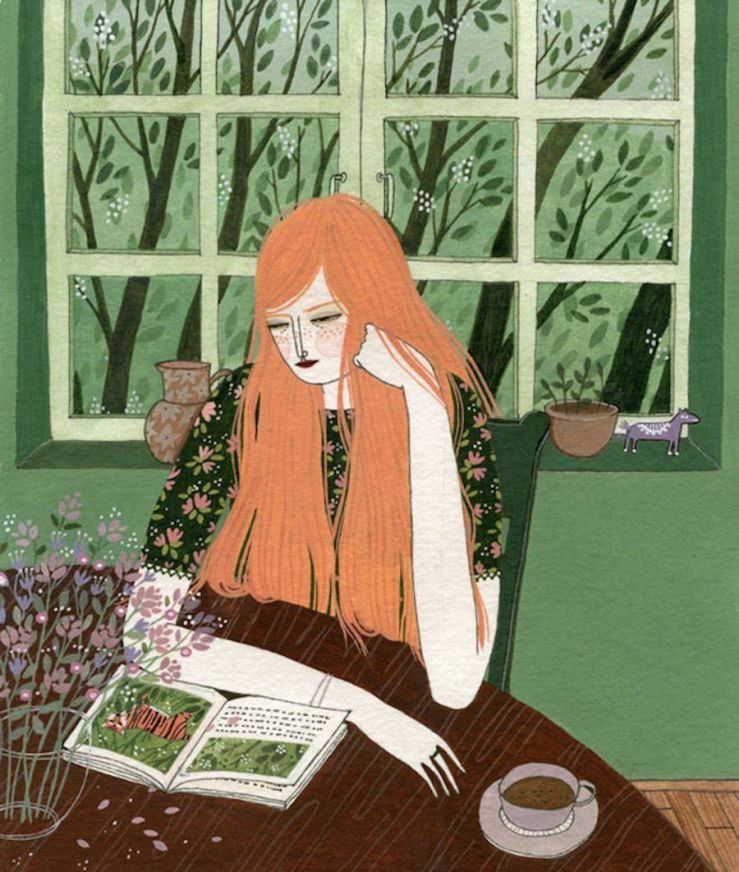
    Art by Otto Kim

    November 21, 2022
    Daily Thoughts, happiness, Happy, joy

  • How To Escape From Prison

    Discovering that I had a mental illness was eye-opening and brought clarity to the lens I had spent seeing the world throughout my life. The greatest freedom is making the decision to change even though it’s terrifying and confronting as hell. The truth is you are not powerless and you deserve to live a life feeling fulfilled. This is something I’m still learning to see. There’s a stigma still associated with mental health that can make it difficult to speak about it in a transparent way because there’s a fear of being judged, treated differently, and misunderstood. It can increase feelings of isolation in our experience, despite it being one of the most collectively shared experiences.

    In the book How to Escape from Prison by Dr Paul Wood he shares his memoir of his own experience in prison. The book was inspiring, raw and honest and it speaks from the heart and tells us that you can turn your life around no matter what false narrative you’ve believed in throughout your life. It was extremely touching and incredibly inspiring to know that change is always possible no matter what has happened throughout your life. You can overcome your inner demons and take control of your life. In the second section of the book, Wood talks about the Five Steps of Freedom.

    Five Steps to Freedom

    You were born free. We were born free. During our childhood we spent time running around, playing and laughing without creating self-defeating thoughts and beliefs. We wouldn’t overthink things and we lived in the present moment. As we get older our identity can feel distorted and we can feel lost in how we see ourselves and we can create limitations within ourselves. We create a birdcage that we enclose ourselves in despite having the key within us all this time.

    Choosing to break out of your mental prison. We all have a choice in how we perceive something and what we act upon. When we make the conscious choice to break out of our mental prison, we acknowledge those thoughts and beliefs that have been holding us back. It takes a lot of courage to break out of our mental prison because it’s far easier to be comfortable in what we know. The words we speak to ourselves have immense power as they are the reality that we live and the actions we take. We have the greatest choice to change our lives and our mindset.

    Make the escape. Taking the first step takes us onto the path of freedom. We often see reaching a goal as something that will take enormous effort. Wood mentions the importance of being specific about what you want to change. It can seem daunting and unreachable if our goals are broad and feel distant in the future. When making the escape there will always be a fear that we’ll need to confront. Making the escape means that we take those small steps that make a difference and listen to our ‘authentic voice’.

    Fight for your freedom. What do you spend your time doing? How do you speak to yourself? What are your values? The greatest battle is often the one within yourself. The thoughts you tell yourself are often the first barrier you will face. Overcoming those inner battles comes with self-discipline and self-control. Wood says “self-discipline requires practice, and the more you practice, the more naturally it comes to you […] they are developed through practice and application. They’re just like muscles.”

    Living Free. “Freedom is a journey, not an event” as Wood shares an analogy about fitness. You don’t exercise and immediately stay fit. It requires ongoing effort. Living in freedom isn’t a quick fix that brings us momentary happiness. It’s gaining strength and resilience to face life’s challenges and to live as your authentic self. Wood says the four areas to develop emotional fitness are your relationships, your thinking, looking after yourself physiologically, and your environment.

    What’s the mental prison that you create for yourself?

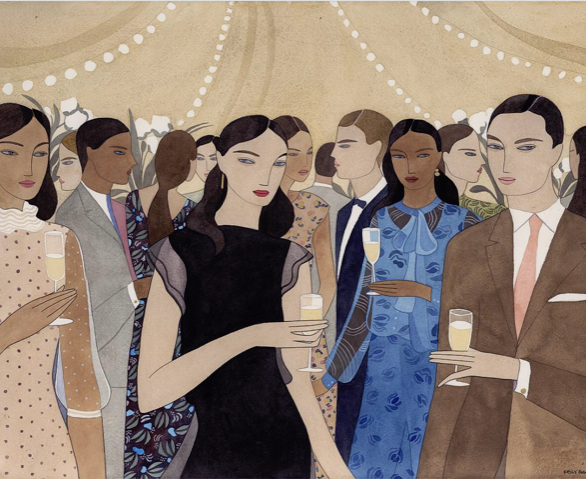
    Art by Becca Stadtlander

    April 5, 2022
    Books, Dr Paul Wood, mental health, mental illness, Mental Prison, prison

  • The Art Of Slow Reading

    Your eyes skim across the pages of the book from left to right racing towards the finish line in anticipation. You feel a wave of excitement discovering what happens next as you determinedly read quickly through the book. There’s a great sense of accomplishment that comes from finishing a book, but ultimately reading is about quality, not quantity. If we are able to read a book and absorb the wisdom, lessons and knowledge while applying it in our own lives, then that’s one of the most rewarding things in life.

    Remember when you were a child listening attentively to a storybook and the excitement of hearing what happens. There’s a great sense of presence, visualisation, engagement and empathy towards the characters. The story is read at a steady pace as we listen to the different tones and tempo of the story. There’s a simple joy in reading as we’re taken on a journey with the characters while being transported into an entirely new world.

    We are often rushing through time which can make us lose sense of the present. Fast reading can come in handy as a skill and it’s incredibly prevalent in our daily lives. For example, when you’re reading a news article, watching subtitles on the television or when you’re looking through a document you will naturally look for keywords and information at a glance. However, when it comes to reading a book, the best kind is when we are able to engage with the story we’re reading and deeply listen and connect with it.

    Art by Monica Barengo

    January 18, 2022
    art, Books, reading, slow reading

  • The War Of Art And The Pain Of Resistance

    A battle with the ego is a daily war, a mere voice in our head and a character that tortures us. The sense of our true self is experienced when we let go of thoughts that aren’t true. Those limiting thoughts creep in to consume us and eat us alive. The voice feeds us lies that aren’t true, and those feelings can be overwhelming. After reading the book The War of Art: Break Through the Blocks and Win Your Inner Creative Battles by Steven Pressfield, he tells us the power of resistance, and the power of our ability to concentrate and do what we need to do. He enlightens us on the true meaning of the Self and encourages us to stay in tune with the Self.

    How many times in our lives do we tell ourselves that we can’t do something? How often do we encourage people in their endeavours, yet we can easily bring ourselves down. Pressfield says that “Casting yourself as a victim is the antithesis of doing your work. Don’t do it. If you’re doing it. Stop.” I really felt those words, as if a wise teacher was telling this to me directly. We can often become a victim to doing something we know in our hearts that we can do, or we desire to do it, yet resistance and fear pierces us and stops us from taking action.

    Resistance thrives off of stopping us through procrastination and disbeliefs that end up taking more expended energy and effort. It becomes painful. It becomes soul-destroying fighting the resistance. Resistance exists from our fear. One of the profound words that Pressfield mentions is the fear that we will succeed. We are fearful to face our fears in fear that we might become the person that we truly are. Fear consumes us, yet failure is the necessary step that we must take to survive in the world.

    What truly matters to you? We are dictated with definitions of what happiness, success and love should look like in society. We are told that we are always living in lack and that there is always something that needs to be cured, fixed, improved or changed. We are told that there is product that will fix our problems, and that there is always a problem existing in our life. Pressfield states that “We live in a consumer culture that’s acutely aware of this unhappiness and has massed all its profit-seeking artillery to exploit it.”

    In the consumer culture that we live in, we are told that we can attain happiness in an instant pill-like substance that will satisfy our desires and needs. Whether that be in materials, money or status. Pressfield elborates on the differences between the amateur and the professional. The Professional understands delayed gratification and is patient in the end results whilst knowing the importance of the process. The Professional knows that good things take time.

    You create the reality you live in. We decide our attitude regardless of the situation and we must remember that our emotions can distort reality. This is the wisdom that I strive to live by and often the truth is that as humans we are aware and knowing of many things, but the absolute difference is in practicing it. We can think about how we live in a world with two strong emotions of fear and love. When we have fear, we judge others.

    Pressfield says that “Individuals who are realized in their own lives almost never criticize others.” This may be a beautiful rarity in its purest form, but a practice we should all aspire to each and everyday. This world desperately needs more kindness, love and empathy. The ability to see things deeply and truly from another’s perspectives, to have true empathy, to have deep compassion, to act with integrity and love and to not judge others out of fear.

    When we are chasing the finish line, we lose focus. When we focus on the journey, we learn and we grow. This is our own journey. It’s like the tortoise that persists and keeps taking that one step ahead, rather than the hare rushing to get ahead. Pressfield reminds us to “Remember, Resistance wants us to cede sovereignty to others. It wants us to stake our own self worth, our identity, our reason for being, on the response of others to our world. Resistance knows that we can’t take this, no one can.” He reminds us that Resistance is a bully that has no strength of its own. Its power comes entirely from our fear of it.

    Whatever it is that you enjoy doing every day, whatever it is that brings you joy, whatever it is that makes you feel a sense of purpose – please don’t ever stop doing it. There are moments where our mind tells us it’s too difficult to start, but often making the small steps count. Whether it’s playing an instrument, writing a book, or painting an artwork. Pressfield’s words beautifully says that “When we sit down each day and do our work, power concentrates us. The Muse takes note of our dedication.”

    Our mind can be the biggest battlefield that we will ever fight in our lives. It will tell us all the lies to tear us apart and it will try to tell us that we can’t face the world. The mind can be a prison where escape seems impossible. We are trapped in our continuous cycle of negative thoughts, until we come to realise that the key is within us the whole time waiting to unlock and free ourselves. One of the greatest choices that we can make for ourselves is to fight to be our true self and to strive to go past the resistance.

    We all have the ability, but as we get older, it’s easy to forget it. We watch the beauty of nature, and how it flows effortlessly and watches the season goes by. It’s as simple as a child sitting down, being lost in play and being completely present in the world. The child doesn’t judge him or herself for the artwork they draw, the child just draws because they enjoy it. The power is within us. The ability to get up and do something. The ability to fight through the fear. Whatever it is that we do in our lives, the ability to have humility in all that we do is one of the greatest.

    The principal of organization is built into nature. Chaos itself is self-organizing. Out of primordial disorders, stars find their orbits; rivers make their way to the sea. – Steven Pressfield

    The self is our deepest being. The self is united to God – Steven Pressfield

    Art by Miren Asiain Lora 

    April 18, 2021
    book, resistance, steven pressfield, the war of art, war of art

  • The Handbook for Highly Sensitive People

    Humans are wired to connect and to have authentic conversations. Being sensitive, empathetic and vulnerable are traits that allow us to truly connect with people. A highly sensitive person (HSP) experiences the world through a heightened way through high sensory experiences. This may be through crowded places, strong scents or loud noises. It is said by the clinical psychologist Dr. Elaine Aron that 15-20% of the population are HSPs. HSPs process and feel emotions more deeply than others and they are highly empathic and tend to have rich inner lives. The emotions they may feel are very deep whether that may be positive or negative.

    Growing up as a classical musician, I was deeply moved by music during a performance, a painting in an art gallery, reading a book or watching a movie. Taking actions such as surrounding myself in nature, sitting at a library or taking time to pray or meditate would bring peace and calm. Discovering that I am an HSP explained so many factors from my childhood, career and the unexplainable feeling that there was something wrong with me. The act of practicing loving yourself and being gentle with yourself is one of the most kindest and lifechanging things you can do for yourself.

    I recently read The Handbook for Highly Sensitive People by Mel Collins, and felt touched by a lot of the ways she describes the experiences that HSP’s have during their lifetime. The book is separated into three sections. The first section expands on the term HSP. This includes the definition of an HSP, the Environmental and sensory triggers and the challenges HSP face. The second section looks at different strategies through processing emotions, practicing self-love and tapping. The third section talks about the spiritual perspective from exploring our past lives and maintaining inner balance.

    The book is a great introduction for those who want to have a better understanding of being an HSP. The book reminds you that you are not alone in this journey, as it invites HSPs to recognize their strengths rather than look at themselves as flawed. Collins expands on the top ten challenges faced by HSP’s. These include being empathic sponges, deep emotional sensitivity, a feeling of not belonging, a difficult childhood, self-esteem and self-worth issues, relationship struggles , health issues, difficulty accepting the ‘inner darkness’, parenting parents or other family members and feeling unfulfilled.

    Being empathic sponges can be draining due to the HSPs being kind-hearted and highly empathic by nature. When surrounded in a negative environment it can leave them feeling over-stimulated. Collins says that “HSPs often feel a need to withdraw from the outside world to release the energies absorbed and to recharge.” Deep emotional sensitivity is felt through the positive (joy, kindness and love) and negative emotions (guilt, shame, fear, hurt, loss, unworthiness, jealousy, anger and feelings of betrayal). A feeling of not belonging can start from a young age particularly for those who have experienced a difficult childhood.

    Self-esteem and self-worth issues may arise due to the HSPs sensitive nature being criticized or judged from a young age, causing shame and embarrassment because of it. Relationship struggles can be common for HSPs such as nurturing friendships, as they are natural givers and good listeners. This can attract the friendship patterns that are one-sided. Health issues can be a problem as HSPs are extremely sensitive to pain. For example, they may experience disorders such as chronic fatigue, fibromyalgia or insomnia.

    Difficulty accepting the ‘inner darkness’ is a common trait for many HSPs. HSPs tend to be kind-hearted people who want to be good to others. Collins states that “They often have difficulty accepting what is viewed as the ‘darker’ side of themselves. This can lead to them suppressing what they see as their more negative emotions.” The words Collins adds rings true “whatever you resist persists.” It’s important to find healthy and safe ways to release any suppressed emotions.

    HSPs can grow up taking the role of the parent subconsciously. This is common for HSPs whose parents were emotionally unavailable. The final challenge Collins states is feeling unfulfilled. Collins states that “In my experience working with HSPs, many have a strong drive to feel they are making a difference in the world. As a result, many believe that if they don’t feel fulfilled in this way, they are in the wrong career.” Many may find that there is a long period where they may spend searching for what they are ‘supposed’ to be doing. However, she says that “In reality, however, any job has the capacity to reflect an aspect of themselves or meet an inner need […] Every job can be viewed in this way if you make a choice to do so – as a stepping stone towards a more fulfilling purpose.”

    For many HSPs it can feel like you are spending a lifetime finding your purpose and understanding the depth and complexities of your emotions. Embracing your inner self and accepting that you feel deep emotions will free you from the chains. The pain was only extended through the deep fear of judgment and rejection for how I was feeling. Taking steps and finding specific ways that help you with your feelings is an important step to healing. I really hope in writing this, that it can help even one HSP know that you are not alone. I spent many years with depression and anxiety. I found methods such as meditating, praying, journaling, walking, being in nature and self-havening incredibly healing in the moments where I’ve felt helpless or overwhelmed.

    Your sensitivity is your superpower. The ability to empathise towards others and deeply connect to animals, nature, music and the arts is a gift. The search for meaningful connections means that you give your all or nothing in friendships and relationships. Sensitivity is both a blessing and a challenge, but sensitivity is a strength, not a weakness. We live in a world that tells us that we need to be a certain way, but when we acknowledge the strength of being sensitive, it opens the door to understanding. The characteristics that you may have not seen as worthy are the very aspects that make you beautiful.

    “By becoming conscious of what it is in the ‘darkness’ or ‘shadow, you are shining light into the darkness and encouraging it to dissolve.” – Mel Collins

    Art by Kate Pugsley

    March 1, 2021
    book, Books, highly sensitive people, highly sensitive person, HSP, Mel Collins

  • Why We Should Read More Books

    The magic of reading is that it allows you to expand your mind, use your imagination and learn something new. It helps you gain a new perspective, go on adventures and leave your comfort zone. Reading brings emotions, thoughts, and ideas to ponder on. Books were a special part of my childhood, from the bedtime stories, trips to the library and getting lost in another world. When I was younger, there were shelves of books and magazines at home. We had many National Geographic magazines, all the way from the 1980’s, and I liked to sit on the floor and read them. On the shelves were classics from Anne Frank’s Diary, The Call of the Wild, The Little Prince, Jane Eyre, Animal Farm and The Catcher in the Rye.

    During high school, I went through a stage where I read a lot of books by Jane Austen and Shakespeare. Reading teaches us the virtue of patience, empathy, loyalty, kindness, humility, courage, respect and so forth. There are characters that go through a journey that we’re invited to go along with. I’ve found reading to be really helpful in improving one’s writing, even though I’m still working on my grammar. Every author has their own style of writing, and it’s good to be exposed to different styles. Writing is therapeutic, but reading relaxes the mind. It allows you to truly stay in the present, reading each word as it comes, yet being able to completely escape into somewhere else in your imagination.

    Books require us to use our imagination. It creates a quiet space, which is important to have during the day. I also find that reading before going to sleep can really help with falling asleep quicker, and also the exposure to less screen time. When I use digital technology at night time, I find my mind is more active, but when I read more at night, the mind tends to be more relaxed. We can learn something new from the characters and stories. A lot of new words I’ve picked up over the years are from reading, whether it’s from a fiction book, textbook, magazine or online article. When we read it stimulates our brain, and it also helps us to momentarily focus on something else.

    I’ve found this to be very healing, as it’s helped so much in lessening my anxiety. Anxiety is created when we place too much focus on ourselves and create worry in our mind. Reading fills our mind with different stories, and we can gain more perspective on life. It’s also a great way to connect with someone if you’ve both read the same book, and you can talk about the story, ideas, and characters. The best thing about books is that there is something for everyone, because of the endless amount of genres. Have you ever felt that books tend to be more colourful in your mind, compared to when you see a movie version? Although there may be exceptions to some films, I’ve always found that the books are always more detailed and graphic in the mind. Our imagination is so powerful.

    Reading helps to improve your memory and ability to focus. It requires attention in order to know what’s happening, and your memory improves as you follow along each chapter. When you read, it’s a process of focusing on the page. I find that if we use our digital devices, it’s easier to get distracted because of the different functions. However, a book just requires us to read each page to the next. Enjoying the simple joys in life is one of the ultimate reasons to read more. I still like to read picture books sometimes when I go to the bookstore or sit in the library. I don’t think you’re ever too old to read children books, or too young to read a long fiction novel if you want to. Reading is a wonderful hobby to have and it’s a great way to fill the free time during the day.

    What are some of your favourite books?

    August 6, 2018
    Books, Books, read, reading

  • A New Zealander’s Story On Being Chinese

    I finished reading Being Chinese – A New Zealander’s Story by Helene Wong in two days, and it really made me think about my own background, experiences and thoughts on being a New Zealander. Wong was born in Taihape, with a mixture of second and third generation in her family, and in her book, she explores her family history. She shares her experiences in acting and theatre, and the stereotypes and often lack of authentic representation that occur within the industry. I really encourage anyone to read this book, as it really makes you think about the importance of cultivating a society that treats everyone the same. It’s something we should all strive for. It makes one reflect on their own background and the portrayal of Asians in the arts and media.

    I think about how when I was younger, I sometimes never felt quite completely Taiwanese, when I was in Taiwan, and yet not quite completely Kiwi when I was in New Zealand because of my appearances. Even though I was born and raised here. There is a sentence in Wong’s book where she writes “I ask myself, just how Chinese am I?”, and as she writes about her childhood, there were many parts that I could relate to and I believe many Asian Kiwi’s may have also experienced.  

    Growing up, there was this feeling of Other as my last name would say. There would be the constant mispronunciations during school assemblies and prize giving, yet it was something I simply got used to. In Chapter 3 titled ‘I never think of you as Chinese’, she shares a story in which someone said those words to her. She talks about assimilation, and it made me think about an English paper I took last year, where I did an essay on Amy Tan’s essay on Mother Tongue. It made me think about accents, and how often I noticed growing up that because my parents had Asian accents when they spoke English, they were perceived a certain way compared to an Asian with a Kiwi accent.

    I related to Wong’s love for writing, as English was always one of my favourite subjects, and I loved writing essays, reading books and spending time thinking and analysing about texts and meanings. Wong talks about how because of one’s physical identity, we will be viewed a certain way. It made me think of when I was placed into ESOL (English for Speakers of Other Languages) in primary school, even though my English is fluent. It makes me think about how because of the way one looks, I will always be inescapably asked where I am from. If we look at the arts, media, advertising and many other industries in New Zealand, we have to emphasise that there is a need for more representation.

    Wong writes about the films she grew up watching, and how often stereotypes and whitewashing occurred. She writes “…there only for their ‘Chineseness’. Worse, if they were anything more than exotic colour and had dialogue, the parts were usually played by white actors in slitty-eyed yellowface. They made me squirm with anger. Despite evidence all around us of Chinese people doing the same things as everyone else – in my own family, occupations ranged from nurse to architect, hairdresser to psychologist – Chinese were never cast in these roles.” She talks about food, as she writes “…when the look, taste, texture, fragrance and sound of a dish all came together it was art, and eating it brought a burst of joy.”

    When the nineties arrived, there was an increase in immigration. Wong talks about how during this time, she really became ‘Asian’. She talks about the media stories in 1989 about immigrants, which used the phrase ‘Asian Invasion.’ She writes that “White New Zealanders were suddenly seeing more Chinese faces on the street…They did not say the same of the South Africans who were also arriving in the country under the same immigration policy. Chinese were too different – in looks, speech, behaviour.” She continues to write that “The Sinophobia also came from longstanding beliefs in the West that Chinese were inferior.” When people deny this, they roll everything under the carpet to keep it quiet. However, I really believe that we need to speak about it more.

    The term ‘casual racism’ is used, and I think about how often it comes from ignorance and unintentional offense, and other times it’s overt and covered as a joke. It really starts with accepting and being respectful of everyone’s differences. Every individual person is so unique, full of layers and has a beautiful story to tell.  Auckland is one of the most culturally diverse cities, and being born and raised here, I call it my home. However, there is still a lot of room for improvement and change, and I believe that we can and we will see more diversity in the arts and media industry.

    Photography by Sun Jun
    April 6, 2018
    Asian, chinese, New Zealand, new zealander

  • The Beauty Of Walking Long Distances

    I recently finished reading a book called A Philosophy of Walking by Frédéric Gros. It was such a beautiful read. It was a peaceful feeling walking to the rose gardens the other day, knowing I’d read a book about walking! If you have ever read Jane Austen’s Pride and Prejudice or watched Keira Knightley in the film adaptation, then you may appreciate Elizabeth Bennet’s love of walking. There’s such a sense of pure satisfaction of soaking in the morning sunlight, cool air and nature around oneself. The feeling of being another stranger in the crowd, going on an adventure or getting lost and discovering a new place.

    The beauty of growing up in the country side is that walking is a daily joy. Your senses thank you for the breath of fresh air, birds singing, rolling green hills and the feeling of gravel and grass under your soles. If there are any places within walking distance of half an hour in the city, I prefer to walk instead of taking the bus or train. I was walking in the art gallery the other day, and it was one of the most therapeutic and simple things that brought so much enjoyment. The feeling of being surrounded by nature, art and books is some of the little joys in life.

    Have you ever noticed if you’ve ever had a terrible day, walking seems to allow your mind to think with more clarity or just let the stress lessen even just a little? In that moment, you don’t feel completely stuck in your mind enclosed in your room, but the world around you reminds you that you’re not completely alone. Walking is good for your body, soul and your existence. It gives a sense of purpose, meaning and peace in ones life. The simple act of moving one foot in front of the other, sets our mind free. It opens us to see the world. Many writers venture out into the world to experience, before being fully absorbed into writing parts of a novel.

    There is time for reflections, thoughts, ideas and imagination to run wild. Walking relieves the heavy weight of anxiety or emotional pain. Gros talks about how there are those who walk for a short period of time during the day as a boost, while others walk for hours and hours. The feeling of walking to a destination, such as the library, art gallery or park always fills me with a sense of small purpose. It may sound unimportant to another, but as I set out on the journey to the place, it makes me feel rewarded once I arrive. When we walk, we are just another being walking on this Earth. It’s a gentle reminder of the importance of solitude.

    I remember as a child, walking was like play in the way that you’d feel excited when you arrive somewhere, see something new or meet someone. The curiosity, adventure and journey was rewarding. In a world where there is a fixation on fitness, walking is often overlooked, when it has endless benefits for our overall well being. Taking the action to walk out the door for a walk is necessary in a life where we create complexities. The simplicity of walking reminds us that it’s always the little things. It makes one not become so attached to their own troubles in life. It lets us observe the strangers walking past us, and remind ourselves that everyone’s lives are on a different path.

    We have a wider perspective, a sense of renewed energy and a calmer self when we go outdoors for a walk. When we walk, we are reminded to take it easy and enjoy life at a steady pace, rather than rushing through it. In the words of Shakespeare, All the World’s a Stage, we can be anyone when we walk. There isn’t an attachment to identity, and therefore we ignore any titles or labels of ourselves. It’s one of the most natural things we can possibly do, starting from the moment we learn to walk as a baby.

    We have all the space, time and possibilities. You are the only one who can take those steps to where ever you’re headed to. No one else can walk them for you. There’s awareness, presence and discovery into the unknown or a familiar environment. Repetition in walking can be a comforting motion. It can be a way of escaping or a way of understanding. That is why walking is such an essential part of our lives. We are blessed to have these two legs that can take us around the world, and even just in the streets of our hometown.

    “All truly great thoughts are conceived while walking.” ― Friedrich Nietzsche

    February 6, 2017
    Books, frederic gros, philosophy, walking

Next Page
 

Loading Comments...
 

    • Subscribe Subscribed
      • Tien-Jen
      • Join 2,542 other subscribers
      • Already have a WordPress.com account? Log in now.
      • Tien-Jen
      • Subscribe Subscribed
      • Sign up
      • Log in
      • Report this content
      • View site in Reader
      • Manage subscriptions
      • Collapse this bar