Tien-Jen

  • About
  • Blog
  • Books
  • Culture
  • Daily Thoughts
  • Fashion
  • Personal
  • Contact
  • Portfolio
  • Don’t Forget Your Roots

    Growing up we would go to the beach each year on Christmas day. In New Zealand, Christmas is celebrated during the summertime, so instead of spending it in the snow, you spend it in the sand and sea. The holidays remind me of the smell of the ocean, eating fish and chips, reading on the farm and walking in the bush. The saying ‘don’t forget your roots’ makes me think of the Classic Kiwi song Don’t Forget Your Roots by SIX60. The song reminds us to remember where we come from. It’s made me reflect on the importance of embracing my own cultural roots and staying true to myself.

    For many Asians growing up in Western countries, fitting in meant minimising aspects of their Asian culture to better assimilate and navigate society. One aspect of this is language. Language connects us to others, helps build relationships, and shapes how we understand the world. It’s natural to speak the dominant language in our environment. However, I often felt like there was something missing. Having a deeper connection with our culture unlocks something within the soul. Learning the language and connecting with others in our mother tongue brings a sense of knowing of oneself, knowing of others and respect and appreciation for one’s culture.

    Asians who have grown up in a Western country are often described as a banana (yellow on the outside and white on the inside). When I think about it now there’s a tinge of sadness behind the humour. Because although it’s said as a joke, it implies that we are not ‘Asian enough’ or to put it more bluntly, we’re whitewashed. That terminology can bring feelings of shame. We should embrace our cultural roots no matter which society we live in. When something is perceived as different, it can seem strange to others. However, embracing those differences can help us see that we’re more alike than we are different.

    As a child, the sweet aroma of garlic, ginger and spices would waft through the house. The food that my parents cooked is a fond memory. They were and are such wonderful cooks. I can’t help laugh when remembering taking a red bean bun to school, opening my lunch box, and seeing my classmate’s eyes widen with curiosity and slight hesitation due to the smell. How delicious those buns were! Making dumplings, carefully filling and folding them, eating Zongzi (粽子) during Dragon Boat Festival and Tang Yuan (湯圓) during Lantern Festival were warm memories. Food always brought everyone together.

    The home was filled with Taiwanese and Chinese culture and only Mandarin was spoken but as soon as I stepped outside, the world was Western. This often left me feeling not Asian enough and not Kiwi enough. It’s difficult to describe this feeling except that it can feel like an identity crisis. The environment we grow up in shapes our thinking and beliefs. Western culture often emphasizes individualism, while Asian culture values collectivism. Sometimes, Eastern and Western ideas conflict, but what is most important is having your own values.

    It’s important to recognize that deep trauma can sometimes cause people to distance themselves from their own culture. Sometimes it can even be the seemingly small comments that people make, that one can remember for a lifetime. Sometimes it’s the feeling of rejection that can cut like a knife and cause a lot of pain. Sometimes it’s their own upbringing and sadly there are aspects of every culture where there are beliefs or ways of doing things that aren’t healthy. Everyone’s experiences are different.

    When we speak our mother tongue, we open up our world to deeper connections. Reconnecting could be finding aspects of the culture that resonate with you and integrating them into your life that feels meaningful to you. We can reconnect through people, food, festivals, music, film and tv, books and art. When we don’t forget our roots, we have a better understanding of who we are, where we come from and what values shape us. We have a sense of belonging and we expand our world by embracing the richness of our heritage. Remembering our roots also helps us preserve our language, culture and traditions for future generations.

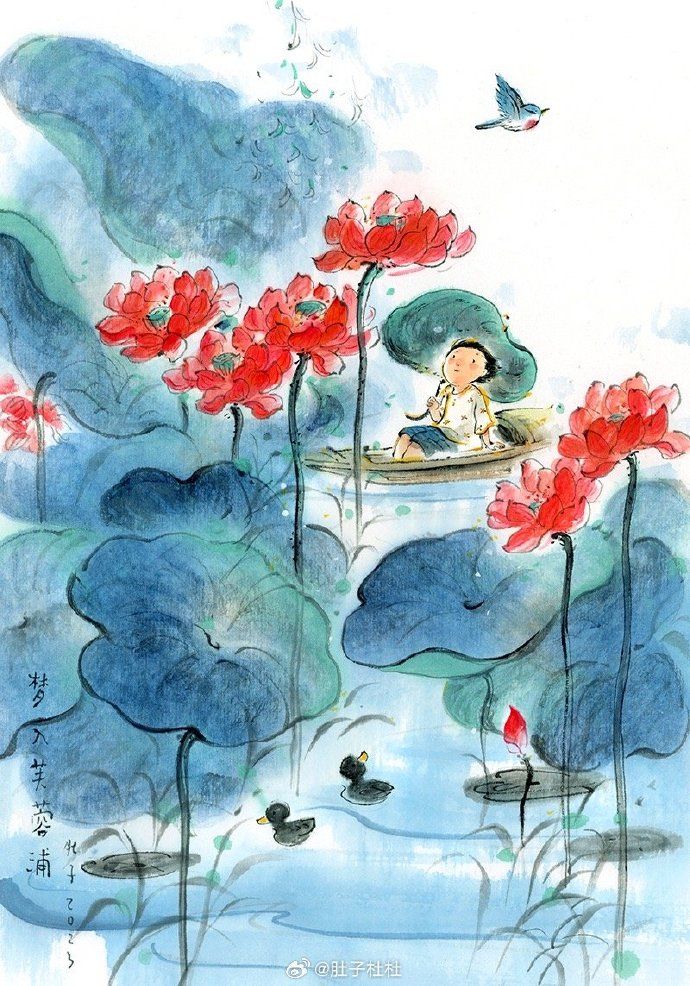
    Art by 肚子杜杜
    August 28, 2025
    Asian, chinese, Chinese Culture, chinese language, Culture, Daily Thoughts, don’t forget your roots, history, language, mother tongue, Travel, Western, writing

  • The Importance Of Keeping Your Mother Tongue Alive

    Growing up as a bilingual child, I remember my Father telling me that I would speak to the neighbours in Mandarin with a Kiwi accent! It was before I started learning to speak English, and I could only get a grasp of what English sounded like. Mandarin is the first language I grew up listening, reading, writing and speaking. It’s also common that some Asians that grew up in New Zealand may prefer speaking in English with their friends. Language connects us with one another. It allows understanding, embracing one’s culture and communicating with more people.

    The most common Chinese dialect is Mandarin (Putonghua), and it is the most widely spoken language in the world with over a billion speaking Mandarin. Growing up in a Western country, it’s easy to speak English for predominantly most of the time. Exposure is important. When I was younger, my parents would read books to us, and my favourite were the ones by 幾米. They had these beautiful, colourful illustrations, and moving stories. The more we speak a language, the more we connect with those who speak it. Your mother tongue can strengthen your cultural ties and allows you to communicate freely with your family.

    English was one of my favourite subjects growing up, as I’ve always loved reading and writing. I like to joke that English runs in the family, as my grandfather and Uncle were English professors in Taiwan. In the article by Amy Tan titled Mother Tongue, she talks about her experiences of the Englishes she grew up speaking. I highly recommend reading it, as it allows us to understand the power of language. I truly feel that if we don’t keep our mother tongue alive, we may risk losing a part of ourselves.

    What is your Mother Tongue?

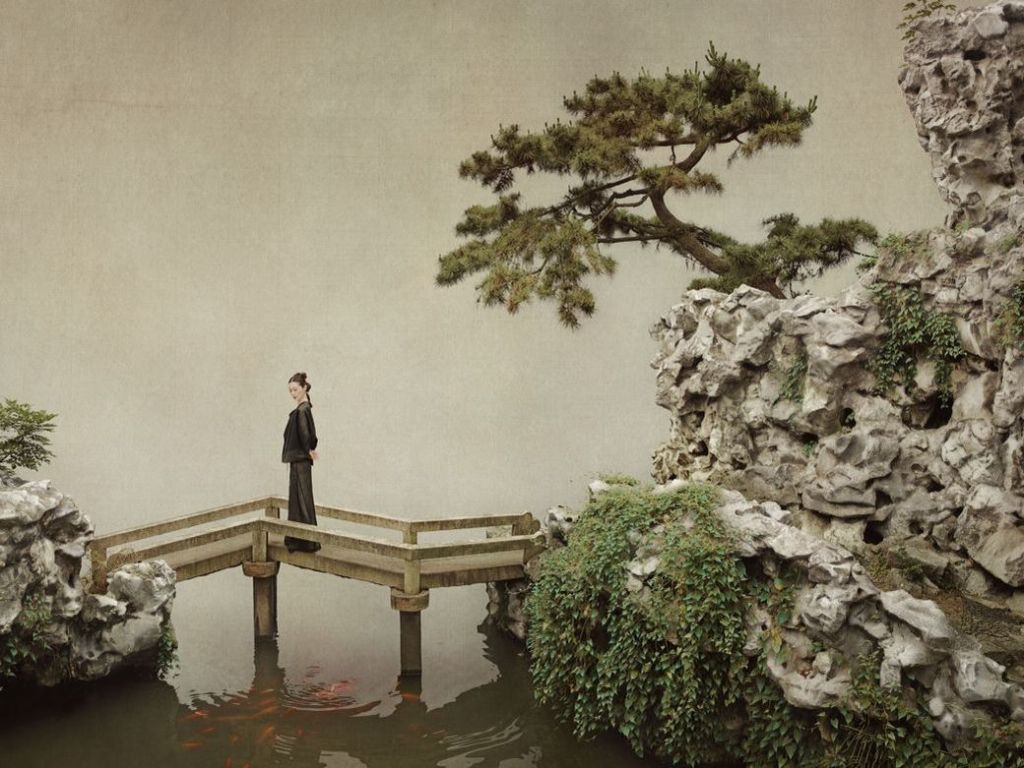
    Photography by Sun Jun
    October 14, 2018
    Asian, chinese, language, mandarin, mother tongue

  • The Common Stereotypes About Asian Women

    I remember being asked for help in Maths, but Maths and Science were my worst subjects at school. When I gave help to other classmates, I knew my explanation could be wrong, but I knew that I was singled out for help because of the stereotype that Asians are good at Maths and Science. When I sat in Music, I remember a classmate would always sit beside me and try to look at my answers when we had tests. It’s common that Asians are thought of as the passive minority, in where many racism directed at Asians are often quietly tolerated or ignored. The general stereotypes about Asians that are very common are: hard working, studious, nerd, intelligent, striving for top marks, bad drivers, rich, musically talented, a doctor, engineer or lawyer and the list goes on.

    However, there are also a lot of stereotypes of Asian women. I did a lot of research and readings on the perspectives of the East last semester at uni, and I feel that there are many stereotypes of Asian women (and men) from the West’s perspective. Many of these stereotypes become perpetuated, exaggerated and repeated in the media. Although, I would agree that there are many, many Asians that work very hard, but that goes for anywhere there are hard workers and lazy workers. The way Asian women are portrayed in films, literature, art and media can have a significant influence on how people view Asian women.

    Asian Mother’s being strict and overprotective. You may have heard of the term Tiger Mum. It’s a parent that pushes their children to pursue academic excellence and excel in their career and life. They can be very demanding and over bearing. This is a common stereotype in Chinese parenting. Unfortunately, true for some, but definitely not for all. My sister and I were never overly pushed to be high achievers. We just did our best, and pursued what we’re passionate about.

    Dating a white person means you have white fever. There is a stereotype that if an Asian woman dates a White man, she has white fever. Vice versa, if a White man dates an Asian woman, he has yellow fever. There are cases where that is indeed true, or the individual has a preference. However in most cases, such as my Mum and my Stepdad, it’s because they both love each other for who they are. The attraction is simply on personality, but unfortunately because Asian stereotypes can be so strong, some people will make assumptions quickly based on ethnicity.

    Being quiet, submissive, mysterious and exotic. Unfortunately, I’ve had strange experiences of old white men talking to me for the wrong reasons. This is one of the most common stereotypes of Asian women. It’s also common in the sexual stereotype of Asian women, that we’re submissive and obedient. Sadly, this has been one of the ways the media views us. This is one of the reasons I feel put off by men who do have yellow fever, because they want to find an Asian woman who fulfills their Asian fetish of the stereotype of an Asian woman.

    Slim, long black hair and almond eyes. Picture an image of a slender frame, porcelain skin, long thick black hair and brown almond eyes. The description makes me think of a Singapore Airlines or Thai Airways advertisements. It’s true that many Asian women are petite, but everyone comes in different shapes, size and shades. However, growing up I would often hear “How do you stay slim Katie,” and sometimes someone would say “because she’s Asian.” Genetically Asians all have black hair and brown eyes.

    Always being seen as an “Asian” women. As a woman, I won’t ever be just viewed as a woman. I will always be an Asian woman. This is something I’m proud of, but I’m also aware that it comes with a lot of labeling, generalisations and stereotypes. I remember talking about how people seem to have to mention when someone is Chinese, Indian, Black etc when it’s not always necessary. It also means dealing with people from time to time who say certain things to you because you’re Asian, that can be insensitive.

    In Asian American Women Faculty: Stereotypes and Triumphs by Celeste Fowles Nguyen, she writes “The model minority stereotypes Asians as hard workers who quietly achieve high results. The lotus flower, or geisha stereotype, defines Asian females as feminine and passive.” Asian women are viewed as uncomplaining, tolerant and passive. However, I want to challenge this view, and encourage people to speak more about it with friends of different ethnicity. We rarely see Asian women in the news media, and many other areas. Representation is important, and I hope that we will see more diversity and conversations about these issues.

    What are some other stereotypes of Asian women? Feel free to share your experiences down below.

    July 13, 2018
    Asian, common, stereotype, stereotypes, women

  • A New Zealander’s Story On Being Chinese

    I finished reading Being Chinese – A New Zealander’s Story by Helene Wong in two days, and it really made me think about my own background, experiences and thoughts on being a New Zealander. Wong was born in Taihape, with a mixture of second and third generation in her family, and in her book, she explores her family history. She shares her experiences in acting and theatre, and the stereotypes and often lack of authentic representation that occur within the industry. I really encourage anyone to read this book, as it really makes you think about the importance of cultivating a society that treats everyone the same. It’s something we should all strive for. It makes one reflect on their own background and the portrayal of Asians in the arts and media.

    I think about how when I was younger, I sometimes never felt quite completely Taiwanese, when I was in Taiwan, and yet not quite completely Kiwi when I was in New Zealand because of my appearances. Even though I was born and raised here. There is a sentence in Wong’s book where she writes “I ask myself, just how Chinese am I?”, and as she writes about her childhood, there were many parts that I could relate to and I believe many Asian Kiwi’s may have also experienced.  

    Growing up, there was this feeling of Other as my last name would say. There would be the constant mispronunciations during school assemblies and prize giving, yet it was something I simply got used to. In Chapter 3 titled ‘I never think of you as Chinese’, she shares a story in which someone said those words to her. She talks about assimilation, and it made me think about an English paper I took last year, where I did an essay on Amy Tan’s essay on Mother Tongue. It made me think about accents, and how often I noticed growing up that because my parents had Asian accents when they spoke English, they were perceived a certain way compared to an Asian with a Kiwi accent.

    I related to Wong’s love for writing, as English was always one of my favourite subjects, and I loved writing essays, reading books and spending time thinking and analysing about texts and meanings. Wong talks about how because of one’s physical identity, we will be viewed a certain way. It made me think of when I was placed into ESOL (English for Speakers of Other Languages) in primary school, even though my English is fluent. It makes me think about how because of the way one looks, I will always be inescapably asked where I am from. If we look at the arts, media, advertising and many other industries in New Zealand, we have to emphasise that there is a need for more representation.

    Wong writes about the films she grew up watching, and how often stereotypes and whitewashing occurred. She writes “…there only for their ‘Chineseness’. Worse, if they were anything more than exotic colour and had dialogue, the parts were usually played by white actors in slitty-eyed yellowface. They made me squirm with anger. Despite evidence all around us of Chinese people doing the same things as everyone else – in my own family, occupations ranged from nurse to architect, hairdresser to psychologist – Chinese were never cast in these roles.” She talks about food, as she writes “…when the look, taste, texture, fragrance and sound of a dish all came together it was art, and eating it brought a burst of joy.”

    When the nineties arrived, there was an increase in immigration. Wong talks about how during this time, she really became ‘Asian’. She talks about the media stories in 1989 about immigrants, which used the phrase ‘Asian Invasion.’ She writes that “White New Zealanders were suddenly seeing more Chinese faces on the street…They did not say the same of the South Africans who were also arriving in the country under the same immigration policy. Chinese were too different – in looks, speech, behaviour.” She continues to write that “The Sinophobia also came from longstanding beliefs in the West that Chinese were inferior.” When people deny this, they roll everything under the carpet to keep it quiet. However, I really believe that we need to speak about it more.

    The term ‘casual racism’ is used, and I think about how often it comes from ignorance and unintentional offense, and other times it’s overt and covered as a joke. It really starts with accepting and being respectful of everyone’s differences. Every individual person is so unique, full of layers and has a beautiful story to tell.  Auckland is one of the most culturally diverse cities, and being born and raised here, I call it my home. However, there is still a lot of room for improvement and change, and I believe that we can and we will see more diversity in the arts and media industry.

    Photography by Sun Jun
    April 6, 2018
    Asian, chinese, New Zealand, new zealander

  • The Reason Asians Carry Umbrellas In The Sun

    When I’m living in Taipei, I feel like it’s completely normal to put up an umbrella when the sun is out. It’s very common in many Asian countries, such as Taiwan, Japan and Korea. On Summer days like today, the sun can be very harsh in Auckland, and I tend to use an umbrella to stay cool and avoid getting sun burnt. Skincare is incredibly important, particularly in Eastern Asian culture, where beauty products have an emphasis on having healthy, bright skin. Our skin is the largest organ, which is why we must take good care of it, as it reflects our health.

    Protecting your skin from early signs of aging. In order to avoid blemishes, wrinkles, spots and sun burns, sun protection is very important. I do feel that this is one of the reasons why some Asians look younger than their age, as many spend a lot of time taking care of their skin. Many people invest in skincare products that help maintain healthy and glowing skin.

    Keeping cool under the umbrella shade. When the sun is blazing hot, an umbrella can be a great way to create some shade. It allows one to stay cool during the hot Summer months, when it seems like 2 minutes in the sun will make one start sweating. I find an umbrella helps, as my hat can only cover parts of my face, but an umbrella can cover your face and neck.

    Avoid getting a sun tan. I still remember when my sister and I were in Taiwan as children, and we walked past two elderly ladies. One of them said “她們好黑!” which translates to “They’re so tanned!” because growing up on a farm, I tended to be playing outdoors all the time and had a very tanned complexion. There is nothing wrong with having a tan. As I grow older, I prefer to embrace my natural complexion.

    The beauty standards are different. When I was living in Sydney, it was common during the Summer time to see topless men and women in bikinis at the beach, park and backyard tanning. It’s similar in NZ, where many Caucasians feel that a tanned complexion gives a warm glow that’s attractive. In East Asia, pale skin is seen as beautiful.

    It’s important to get enough Vitamin D from the sun each day, however this ranges from 15-30 minutes. If you are in the sun for several hours or travelling a long distance, then it can increase the chance of getting a sun burn. Remember to always wear sunscreen. It’s good to have a habit of wearing sunscreen everyday and protecting yourself from the sun. What are your thoughts? Do you carry an umbrella when it’s sunny? 

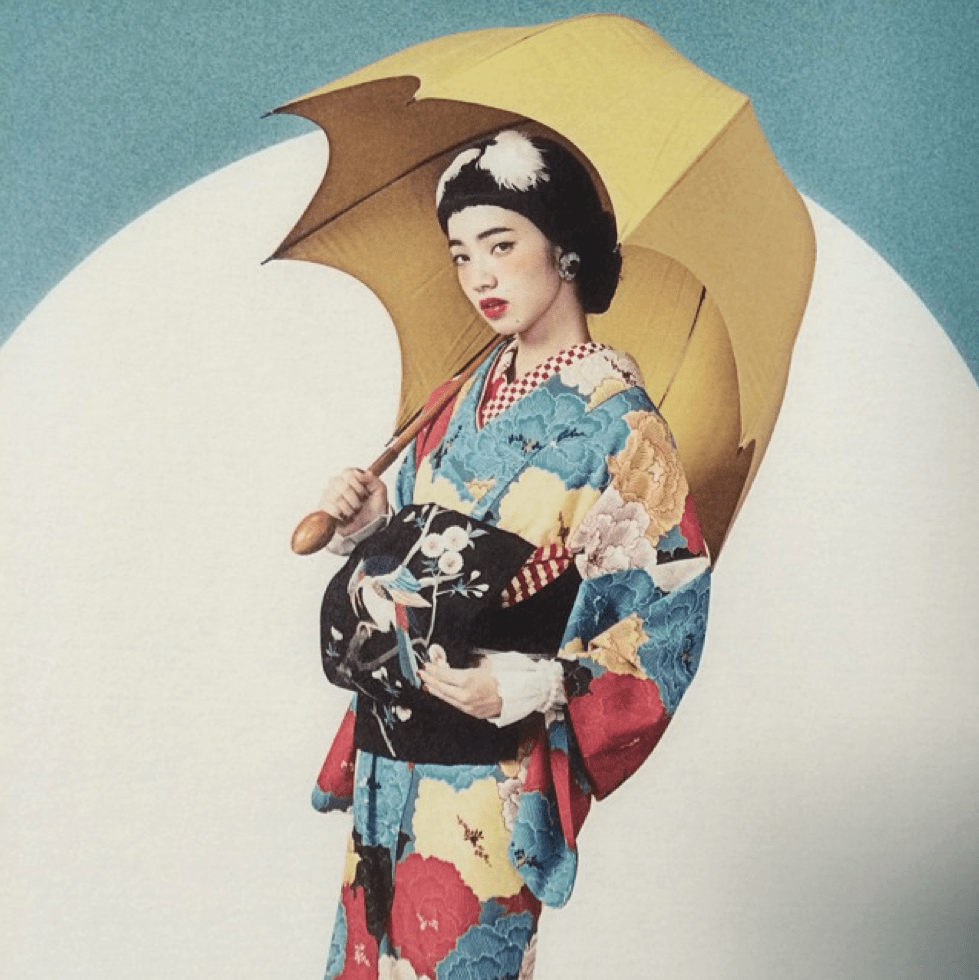
    Nana Komatsu for Kimono hime November 2014 Shodensha Mook 
    February 25, 2018
    Asian, Daily Thoughts, sun, umbrella

  • When You’re Asian And More Fluent In English

    Bodil-Jane-Illustration-Characters-Japan-Modern-Gaaru-2-768x543@2xEnglish was one of my favourite subjects at school as I loved writing essays and reading novels. Although there’s still many aspects where I can improve (note my use of grammar and structuring). My mother tongue is Chinese, as I grew up learning Chinese first before English. We used to go to Saturday Chinese school as children, but I was quite lazy and didn’t feel any motivation to learn it since I was speaking English at school. Perhaps it was because all my friends spoke English, and I wasn’t living in a place or going to a school that had many people speaking Chinese.

    However, now that I’m older I embrace the fact that I’m both Taiwanese and Kiwi. They are both important aspects of my identity. I realise how important it is to keep your mother tongue alive. It’s important to remind yourself what a blessing it is to speak Chinese and English. When I look back, I am incredibly grateful that my parents only spoke Mandarin to my sister and I, because language is such an important part of us. I appreciate growing up being surrounded by books and building a huge interest in reading. Now that I’m older, I put more effort into writing, reading and listening to Chinese. I used to feel a sense of guilt and shame because my Chinese wasn’t fluent but my physical identity says that I should be.

    In high school, my English teacher said that it’s okay that my essay had a few grammar mistakes, because English is my second language. The trouble was that she was more lenient with me even though I was keen to improve my writing. Most of my classmates said I’m lucky I had English as a second language as an excuse, but to me it seemed quite stereotypical, because I was more fluent in English and when other classmates made grammatical mistakes it wasn’t focused on what ethnicity they are.

    The beauty of language is that it allows us to communicate to different people. I’ve been asked many times if I’m an international student or what country I moved from to New Zealand. It’s understandable, because Auckland is quite a multicultural city and there are people from a vast majority of different countries. However, it does remind me of my identity and being asked these sort of questions many times has made me more assured of my own cultural identity. I suppose in writing this, I’d love to encourage you to embrace your mother tongue. Having that is such a precious part of you that can never be taken away from you. If you are also an Asian that is more fluent in English, know that you can improve your mother tongue through self motivation, practice and patience.

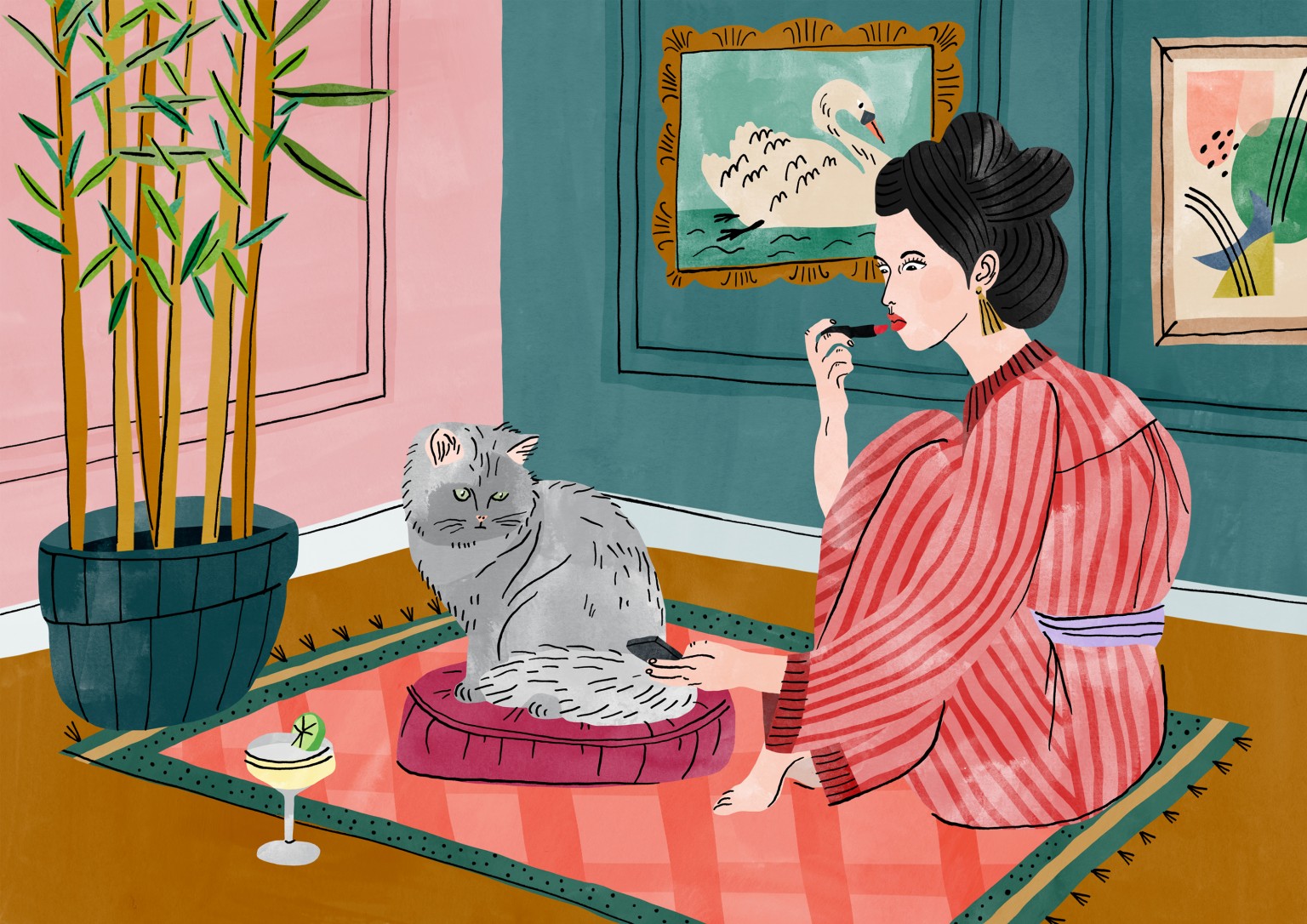
    Artwork – Modern Girl by Bodil Jane
    December 21, 2017
    Asian, chinese, Daily Thoughts, english, fluent, language, mandarin


Loading Comments...
 

    • Subscribe Subscribed
      • Tien-Jen
      • Join 2,542 other subscribers
      • Already have a WordPress.com account? Log in now.
      • Tien-Jen
      • Subscribe Subscribed
      • Sign up
      • Log in
      • Report this content
      • View site in Reader
      • Manage subscriptions
      • Collapse this bar