Tien-Jen

  • About
  • Blog
  • Books
  • Culture
  • Daily Thoughts
  • Fashion
  • Personal
  • Contact
  • Portfolio
  • Don’t Forget Your Roots

    Growing up we would go to the beach each year on Christmas day. In New Zealand, Christmas is celebrated during the summertime, so instead of spending it in the snow, you spend it in the sand and sea. The holidays remind me of the smell of the ocean, eating fish and chips, reading on the farm and walking in the bush. The saying ‘don’t forget your roots’ makes me think of the Classic Kiwi song Don’t Forget Your Roots by SIX60. The song reminds us to remember where we come from. It’s made me reflect on the importance of embracing my own cultural roots and staying true to myself.

    For many Asians growing up in Western countries, fitting in meant minimising aspects of their Asian culture to better assimilate and navigate society. One aspect of this is language. Language connects us to others, helps build relationships, and shapes how we understand the world. It’s natural to speak the dominant language in our environment. However, I often felt like there was something missing. Having a deeper connection with our culture unlocks something within the soul. Learning the language and connecting with others in our mother tongue brings a sense of knowing of oneself, knowing of others and respect and appreciation for one’s culture.

    Asians who have grown up in a Western country are often described as a banana (yellow on the outside and white on the inside). When I think about it now there’s a tinge of sadness behind the humour. Because although it’s said as a joke, it implies that we are not ‘Asian enough’ or to put it more bluntly, we’re whitewashed. That terminology can bring feelings of shame. We should embrace our cultural roots no matter which society we live in. When something is perceived as different, it can seem strange to others. However, embracing those differences can help us see that we’re more alike than we are different.

    As a child, the sweet aroma of garlic, ginger and spices would waft through the house. The food that my parents cooked is a fond memory. They were and are such wonderful cooks. I can’t help laugh when remembering taking a red bean bun to school, opening my lunch box, and seeing my classmate’s eyes widen with curiosity and slight hesitation due to the smell. How delicious those buns were! Making dumplings, carefully filling and folding them, eating Zongzi (粽子) during Dragon Boat Festival and Tang Yuan (湯圓) during Lantern Festival were warm memories. Food always brought everyone together.

    The home was filled with Taiwanese and Chinese culture and only Mandarin was spoken but as soon as I stepped outside, the world was Western. This often left me feeling not Asian enough and not Kiwi enough. It’s difficult to describe this feeling except that it can feel like an identity crisis. The environment we grow up in shapes our thinking and beliefs. Western culture often emphasizes individualism, while Asian culture values collectivism. Sometimes, Eastern and Western ideas conflict, but what is most important is having your own values.

    It’s important to recognize that deep trauma can sometimes cause people to distance themselves from their own culture. Sometimes it can even be the seemingly small comments that people make, that one can remember for a lifetime. Sometimes it’s the feeling of rejection that can cut like a knife and cause a lot of pain. Sometimes it’s their own upbringing and sadly there are aspects of every culture where there are beliefs or ways of doing things that aren’t healthy. Everyone’s experiences are different.

    When we speak our mother tongue, we open up our world to deeper connections. Reconnecting could be finding aspects of the culture that resonate with you and integrating them into your life that feels meaningful to you. We can reconnect through people, food, festivals, music, film and tv, books and art. When we don’t forget our roots, we have a better understanding of who we are, where we come from and what values shape us. We have a sense of belonging and we expand our world by embracing the richness of our heritage. Remembering our roots also helps us preserve our language, culture and traditions for future generations.

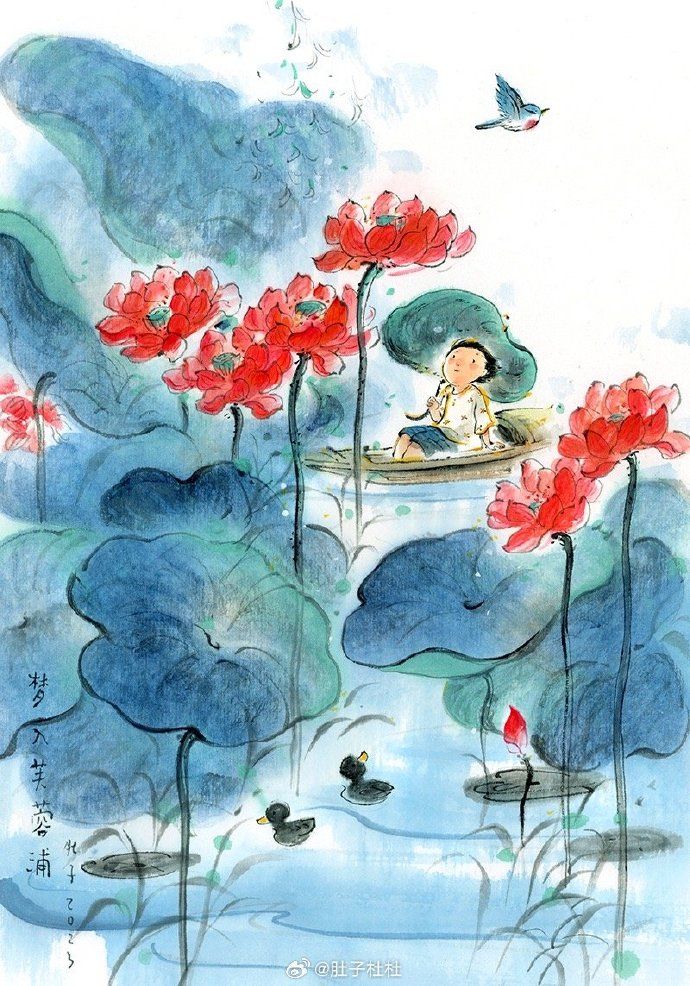
    Art by 肚子杜杜

    August 28, 2025
    Asian, chinese, Chinese Culture, chinese language, Culture, Daily Thoughts, don’t forget your roots, history, language, mother tongue, Travel, Western, writing

  • Improving Your Mother Tongue

    It’s common for those who grew up in a different country to their parents to lose some or all of their mother tongue. It’s natural to want to speak the language that is largely spoken in your environment as it helps you communicate with the people you interact with. This is one of the struggles of maintaining your mother tongue when you grow up in an environment where you largely use one language in your daily settings.

    Language allows us to connect with other people and have a deeper understanding of our culture. It allows us to tell stories, understand different perspectives and express what’s within. My parents were the only people I spoke Mandarin regularly with when I lived at home. The lack of learning the language and improving my grammar meant my Chinese level was like a primary school student. This was most clear once I left home and so the desire to improve began.

    Surround yourself with the language. If you’re working, you can listen to podcasts and music in the background. At home, you can watch videos, TV shows and movies in the language. You can try to even think in the language. This can be tricky but it can force you to be more active in using the language.

    Write down words that you don’t know. Learn new grammar by writing down words that you don’t know and practice them in your daily life. This can be a word from an article or video. You can practice using them during a conversation as it will help solidify them in your memory.

    Read articles and books in the language. Find content you’re interested in yet is a little bit challenging to read. There’s so much content online with specific topics that you can read according to your personal interests. Reading allows you to slow down and helps you recognize more words.

    Engage, use and speak the language. This is one of the most important tips. If you don’t use it, you lose it! Take any opportunity that you can to use the language. I’m still encouraging myself to do this as a big part of improving a language is having confidence. If you’re watching a video you can copy the native speaker and mimic their pronunciation and accent.

      It’s important to remember that improvements take time and daily practice. I’ve found using a language app can help with speaking to other language learners. Practicing with cue cards on apps like Pleco can also help. Learning and improving a language is much like learning an instrument or practicing sports. It takes commitment, focus and daily practice. Remember, practicing a little a day can go a long way.

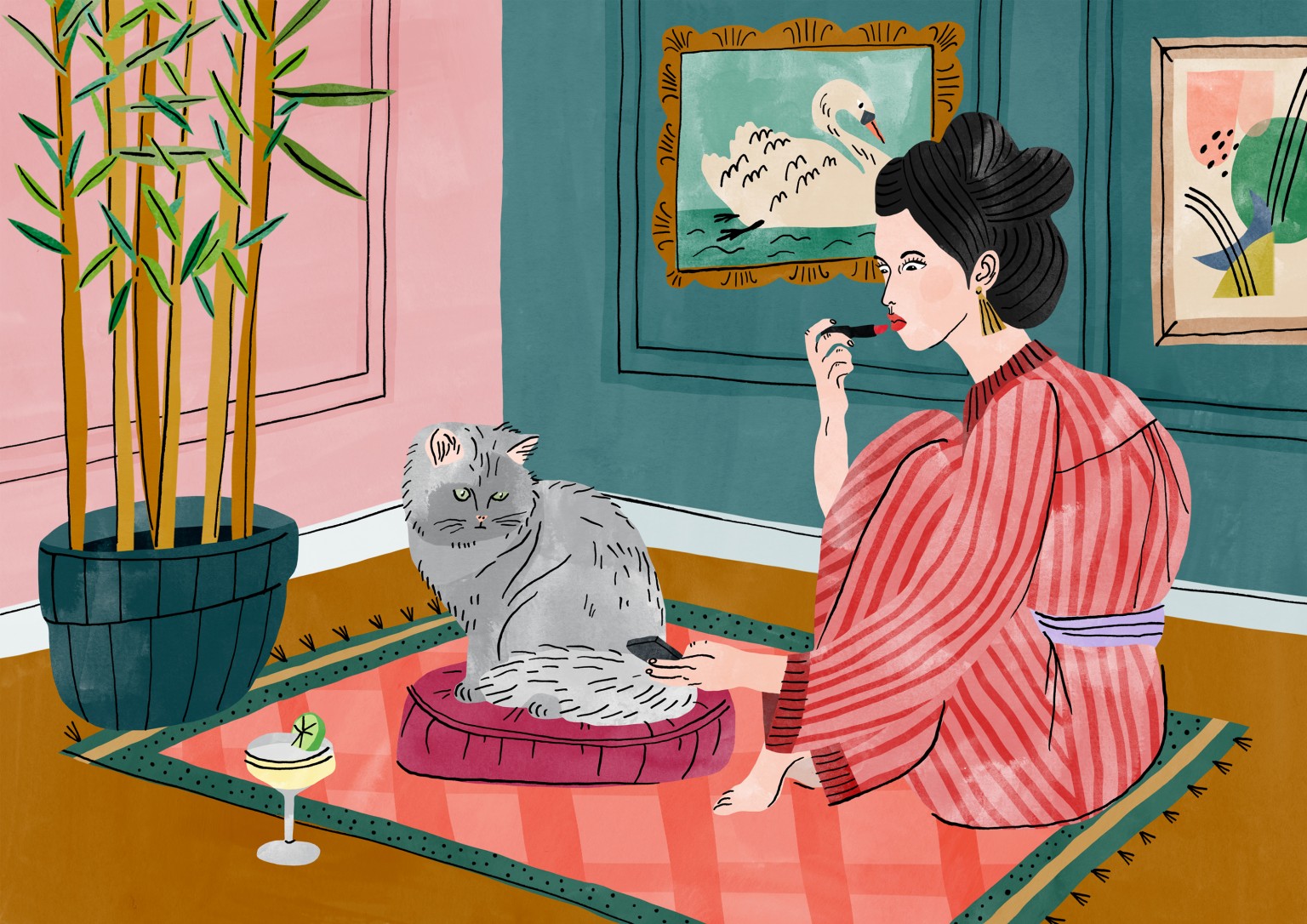
      Art by Kate Pugsley

      July 31, 2024
      chinese, Culture, Daily Thoughts, language, mandarin, mother tongue

    1. Five Reasons To Improve Your Chinese

      Growing up in New Zealand, I learned to speak Mandarin Chinese first. It was difficult to maintain interest as a child when my classmates, friends, and teachers were speaking English. I remember once I started going to school my Chinese regressed. I’d go to Saturday Chinese classes unable to recognize the words on the whiteboard and struggling to understand what the teacher was saying.

      Fortunately, my parents insisted my sister and I must speak Chinese at home, otherwise, I imagine I would’ve forgotten a significant amount of the language. It was in my later teens I felt a desire to improve my Chinese. I wanted to feel a deeper connection with my culture as well as the ability to communicate with more fluency with my family.

      1) It’s fun! Learning or improving any language can be a fun task. You can be met with challenges and amusing experiences. When I was a child, my father was reading to me in the library, and a young boy came up to him to ask “What are you speaking?”. My Dad replied “Mandarin”. The boy replied “I speak pineapple!”

      2) It helps you understand your culture and identity. There is a greater respect for one’s culture when you understand the language. When you retain your mother tongue you are maintaining your cultural identity and you have a more deeper connection with it.

      3) It’s the most spoken language in the world. There are over a billion native speakers in Chinese in the world. By improving your Chinese you can expand your opportunities internationally, or engage with more people and open your world view and perspective.

      4) It helps you improve your English skills. Understanding your mother tongue well helps you in learning English. Research points to how incomplete or inadequate skills in the first language make learning another language difficult for the child.

      5) It improves cognition. Learning and improving a language enhances brain plasticity, as every time you learn something, you promote neuroplasticity. Studies have shown that people who are bilingual tend to have better cognitive skills than those who only speak one language.

      Photography by Sun Jun

      August 25, 2023
      chinese, chinese language, Culture, language, mandarin chinese

    2. The Importance Of Keeping Your Mother Tongue Alive

      Growing up as a bilingual child, I remember my Father telling me that I would speak to the neighbours in Mandarin with a Kiwi accent! It was before I started learning to speak English, and I could only get a grasp of what English sounded like. Mandarin is the first language I grew up listening, reading, writing and speaking. It’s also common that some Asians that grew up in New Zealand may prefer speaking in English with their friends. Language connects us with one another. It allows understanding, embracing one’s culture and communicating with more people.

      The most common Chinese dialect is Mandarin (Putonghua), and it is the most widely spoken language in the world with over a billion speaking Mandarin. Growing up in a Western country, it’s easy to speak English for predominantly most of the time. Exposure is important. When I was younger, my parents would read books to us, and my favourite were the ones by 幾米. They had these beautiful, colourful illustrations, and moving stories. The more we speak a language, the more we connect with those who speak it. Your mother tongue can strengthen your cultural ties and allows you to communicate freely with your family.

      English was one of my favourite subjects growing up, as I’ve always loved reading and writing. I like to joke that English runs in the family, as my grandfather and Uncle were English professors in Taiwan. In the article by Amy Tan titled Mother Tongue, she talks about her experiences of the Englishes she grew up speaking. I highly recommend reading it, as it allows us to understand the power of language. I truly feel that if we don’t keep our mother tongue alive, we may risk losing a part of ourselves.

      What is your Mother Tongue?

      Photography by Sun Jun
      October 14, 2018
      Asian, chinese, language, mandarin, mother tongue

    3. When You’re Asian And More Fluent In English

      Bodil-Jane-Illustration-Characters-Japan-Modern-Gaaru-2-768x543@2xEnglish was one of my favourite subjects at school as I loved writing essays and reading novels. Although there’s still many aspects where I can improve (note my use of grammar and structuring). My mother tongue is Chinese, as I grew up learning Chinese first before English. We used to go to Saturday Chinese school as children, but I was quite lazy and didn’t feel any motivation to learn it since I was speaking English at school. Perhaps it was because all my friends spoke English, and I wasn’t living in a place or going to a school that had many people speaking Chinese.

      However, now that I’m older I embrace the fact that I’m both Taiwanese and Kiwi. They are both important aspects of my identity. I realise how important it is to keep your mother tongue alive. It’s important to remind yourself what a blessing it is to speak Chinese and English. When I look back, I am incredibly grateful that my parents only spoke Mandarin to my sister and I, because language is such an important part of us. I appreciate growing up being surrounded by books and building a huge interest in reading. Now that I’m older, I put more effort into writing, reading and listening to Chinese. I used to feel a sense of guilt and shame because my Chinese wasn’t fluent but my physical identity says that I should be.

      In high school, my English teacher said that it’s okay that my essay had a few grammar mistakes, because English is my second language. The trouble was that she was more lenient with me even though I was keen to improve my writing. Most of my classmates said I’m lucky I had English as a second language as an excuse, but to me it seemed quite stereotypical, because I was more fluent in English and when other classmates made grammatical mistakes it wasn’t focused on what ethnicity they are.

      The beauty of language is that it allows us to communicate to different people. I’ve been asked many times if I’m an international student or what country I moved from to New Zealand. It’s understandable, because Auckland is quite a multicultural city and there are people from a vast majority of different countries. However, it does remind me of my identity and being asked these sort of questions many times has made me more assured of my own cultural identity. I suppose in writing this, I’d love to encourage you to embrace your mother tongue. Having that is such a precious part of you that can never be taken away from you. If you are also an Asian that is more fluent in English, know that you can improve your mother tongue through self motivation, practice and patience.

      Artwork – Modern Girl by Bodil Jane
      December 21, 2017
      Asian, chinese, Daily Thoughts, english, fluent, language, mandarin

    4. How To Improve Your Chinese Language Skills

      7c71991f-36da-44d0-b63f-ff3239bb87cc.png

      Chinese is one of the most beautiful languages in the world. When you see the words themselves, each of them are like a picture. It is the most spoken language in the world by more than 1 billion people. I remember my Grandmother explaining to my sister and I the way each Chinese character are like a picture of the object. 火 means fire, 人 means person and 山 means mountain. If you look at them, they appear very much like the character itself. According to the NZ Chinese Language Week Trust, Chinese will be the third most common language spoken in New Zealand.

      In order to improve a language, we must consistently speak it and expose ourselves to it. If you don’t speak the language with your family, it’s a good idea to find opportunities to speak it with someone. Try speaking it with a friend, language partner, on the phone or attending a Chinese event. The more you speak, the more you remember. A great app to add on your phone is Pleco. It’s a wonderful dictionary that’s easy to use. Try reading a small section of a book, text or magazine article and translate the words you don’t know by using Pleco (or your own dictionary).

      Writing words down can also help you to remember what they look like. Learning and expanding your vocabulary is ultimately one of the ways to improve your skills. Listening is what we’re first exposed to when we’re a baby. We listen to the way our parents talk, and we imitate the words they speak. You can listen to Chinese music, watch a movie that speaks Mandarin, listen to a podcast or watch a Youtuber who speaks Chinese. Finding what works for you is important. Some may find certain Chinese language apps better than others. Some may work better by following a text book, taking lessons in class, having a private tutor or using an e-book.

      Growing confidence in your skills is a wonderful thing. Improving is extremely rewarding. As something beneficial as Chinese, it can be encouraging to know that you will definitely be applying the language in many places. It’s a language that has a long history behind it. It is one of the oldest written language in the world. If you grew up reading Chinese Cinderella by Adeline Yen Mah (I highly recommend the book!), she mentions: Chinese is a pictorial language, not a phonetic one. Our words come from images. The meaning of many characters is subtle and profound. Other words are poetic and even philosophical.

      Photography of Ling BingBing by Sun Jun
      April 6, 2017
      chinese, Daily Thoughts, improve, language


    Loading Comments...
     

      • Subscribe Subscribed
        • Tien-Jen
        • Join 2,542 other subscribers
        • Already have a WordPress.com account? Log in now.
        • Tien-Jen
        • Subscribe Subscribed
        • Sign up
        • Log in
        • Report this content
        • View site in Reader
        • Manage subscriptions
        • Collapse this bar