Tien-Jen

  • About
  • Blog
  • Books
  • Culture
  • Daily Thoughts
  • Fashion
  • Personal
  • Contact
  • Portfolio
  • Don’t Forget Your Roots

    Growing up we would go to the beach each year on Christmas day. In New Zealand, Christmas is celebrated during the summertime, so instead of spending it in the snow, you spend it in the sand and sea. The holidays remind me of the smell of the ocean, eating fish and chips, reading on the farm and walking in the bush. The saying ‘don’t forget your roots’ makes me think of the Classic Kiwi song Don’t Forget Your Roots by SIX60. The song reminds us to remember where we come from. It’s made me reflect on the importance of embracing my own cultural roots and staying true to myself.

    For many Asians growing up in Western countries, fitting in meant minimising aspects of their Asian culture to better assimilate and navigate society. One aspect of this is language. Language connects us to others, helps build relationships, and shapes how we understand the world. It’s natural to speak the dominant language in our environment. However, I often felt like there was something missing. Having a deeper connection with our culture unlocks something within the soul. Learning the language and connecting with others in our mother tongue brings a sense of knowing of oneself, knowing of others and respect and appreciation for one’s culture.

    Asians who have grown up in a Western country are often described as a banana (yellow on the outside and white on the inside). When I think about it now there’s a tinge of sadness behind the humour. Because although it’s said as a joke, it implies that we are not ‘Asian enough’ or to put it more bluntly, we’re whitewashed. That terminology can bring feelings of shame. We should embrace our cultural roots no matter which society we live in. When something is perceived as different, it can seem strange to others. However, embracing those differences can help us see that we’re more alike than we are different.

    As a child, the sweet aroma of garlic, ginger and spices would waft through the house. The food that my parents cooked is a fond memory. They were and are such wonderful cooks. I can’t help laugh when remembering taking a red bean bun to school, opening my lunch box, and seeing my classmate’s eyes widen with curiosity and slight hesitation due to the smell. How delicious those buns were! Making dumplings, carefully filling and folding them, eating Zongzi (粽子) during Dragon Boat Festival and Tang Yuan (湯圓) during Lantern Festival were warm memories. Food always brought everyone together.

    The home was filled with Taiwanese and Chinese culture and only Mandarin was spoken but as soon as I stepped outside, the world was Western. This often left me feeling not Asian enough and not Kiwi enough. It’s difficult to describe this feeling except that it can feel like an identity crisis. The environment we grow up in shapes our thinking and beliefs. Western culture often emphasizes individualism, while Asian culture values collectivism. Sometimes, Eastern and Western ideas conflict, but what is most important is having your own values.

    It’s important to recognize that deep trauma can sometimes cause people to distance themselves from their own culture. Sometimes it can even be the seemingly small comments that people make, that one can remember for a lifetime. Sometimes it’s the feeling of rejection that can cut like a knife and cause a lot of pain. Sometimes it’s their own upbringing and sadly there are aspects of every culture where there are beliefs or ways of doing things that aren’t healthy. Everyone’s experiences are different.

    When we speak our mother tongue, we open up our world to deeper connections. Reconnecting could be finding aspects of the culture that resonate with you and integrating them into your life that feels meaningful to you. We can reconnect through people, food, festivals, music, film and tv, books and art. When we don’t forget our roots, we have a better understanding of who we are, where we come from and what values shape us. We have a sense of belonging and we expand our world by embracing the richness of our heritage. Remembering our roots also helps us preserve our language, culture and traditions for future generations.

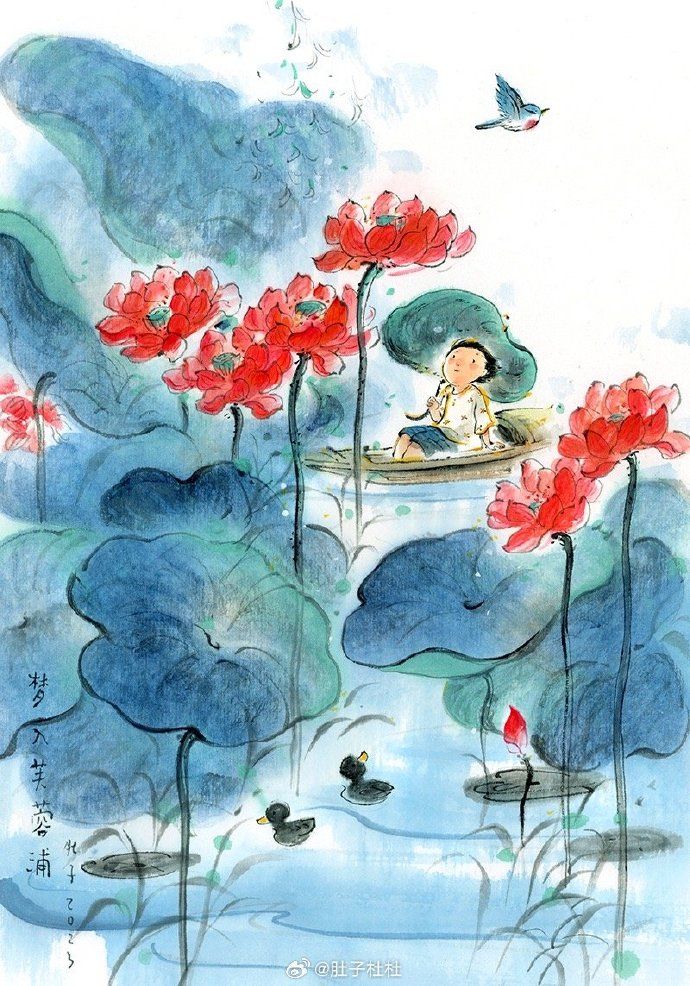
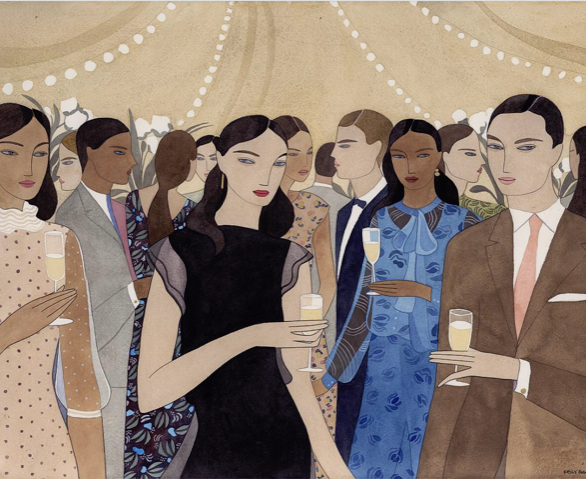
    Art by 肚子杜杜
    August 28, 2025
    Asian, chinese, Chinese Culture, chinese language, Culture, Daily Thoughts, don’t forget your roots, history, language, mother tongue, Travel, Western, writing

  • The Courage To Be Disliked

    No one is thinking about you, nor are you thinking about them. That’s the magic of it: everyone is focusing on their own lives. I’ve often experienced intense social anxiety, but the reminder that most people are busy preoccupied with themselves is a massive relief. Social anxiety tricks you into believing that people are judging everything you do or say, when in reality, most people aren’t paying much attention. We create the mental chains that hold us back and stop us from living freely and authentically.

    The Courage to Be Disliked by Ichiro Kishimi and Fumitake Koga is a Japanese book that follows a dialogue between a philosopher and a young man. The philosopher draws concepts from Adlerian psychology and explores how we can live more meaningful lives. Most people have a deep desire to be accepted, validated and liked. The book shows that true freedom and content comes from letting go of the need to be liked. When we crave approval, we act in ways that are socially acceptable rather than authentic. The truth is, some people will like us and some won’t, and that’s not in our control.

    Everyone has their own tasks. Everyone is responsible for their own tasks in life. We cannot control or change others, but we can focus on what is within our own power. True change comes from taking ownership of ones own action and mindset. The book shares the serenity prayer: “God, grant me the serenity to accept the things I cannot change, the courage to change the things I can, and the wisdom to know the difference.“

    Everyone is different but equal. Each person has a unique background from their life experiences, culture, upbringing, and personality. This reminded me of something a close friend said to me, that “despite everyone being different, we are more alike than we are different.” At the end of the day, we’re all human, sharing this life, roaming the vast universe together.

    The only moment that exists is the present. The only moment we have is right here, right now. You are not bound by your past or defined by what has happened to you. In every moment, you have the ability to choose. We can often restrict our own growth by dwelling on past traumas, upbringing and memories. Adlerian psychology believes that you can change at any moment. Many people avoid change or taking action because they fear how others might react.

    People are our comrades, not our enemy. No one is against you except for the voice in your mind that convinces you that they are. There is no need to compare yourself to others, feel envy, or believe you are inferior. When we choose to see the good in others, and approach them with trust, it brings a deeper sense of connection and meaning to our lives. No one is beneath you and no one is above you.

    Do not seek recognition. This one was a tricky one to digest, because naturally people are encouraged and motivated by positive feedback and praise. However, if we constantly seek recognition from others, we can’t experience true fulfillment within ourselves. We end up needing validation to fill our cup, when the reality is that we are already worthy just as we are, simply for existing.

    Stop caring what other people think. Caring about what others think limits us from living the life we truly want. When we seek validation from others, we lose touch with our true selves. True freedom is letting go of caring about what other people think. Living for approval traps us in anxiety, expectations and inauthenticity. The book reminds us that “You are not living to satisfy other people’s expectations.” When we care too much what others think, it can lead to inaction and self-doubt.

    All problems are interpersonal problems. The connections we have with people can bring the greatest joy in our lives. However, they can also be the source of much of our suffering. Even in the moments where we’re alone, our mind is making connections with others. We can resolve this by choosing to trust others, cultivate a sense of belonging within a community, taking responsibility for our own actions, and embracing the courage to be disliked, the courage to change and the courage to be happy.

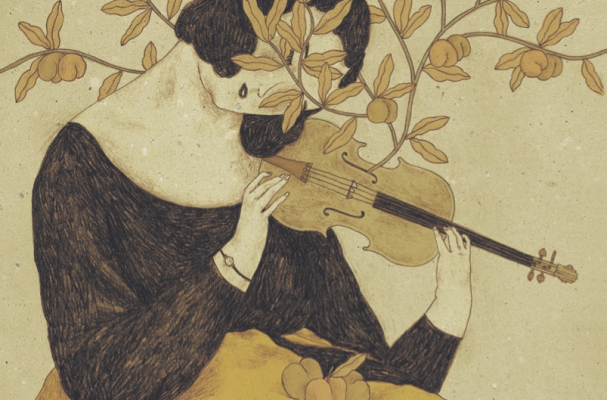
    Art by Kelly Beeman

    July 12, 2025
    Adlerian Psychology, book review, Books, Books, Life, reading, The Courage to be Disliked, writing

  • The Art Of Writing On A Piece Of Paper

    wk6-work-607x400.png

    An action I appreciate so deeply is when someone takes the time to sit down to write a letter or a card. I find that there is somewhat a lost art of writing on a piece of paper, writing a letter to a loved one or making a card for someone. I appreciate a written letter or card, because in a fast-paced, immediate world where we can easily send a message in a few seconds, a letter takes time, movement of your hands, thought processes in your mind, sitting down to think and it takes your heart to pour a part of itself onto the paper. Writing is personal and shows a part of yourself that we cannot see online, especially when online writing can only be read by a font. Our handwriting can say so much about ourselves. It’s a way of expressing oneself, that isn’t like when one is typing an email or sending an image.

    I have been thinking about why I choose not to use a laptop when I’m at university, and I still am adamant to continue writing pen to paper. One reason is that writing allows you to listen to the key points, and write them down, rather than type a lot that may not be necessary. Writing allows you to put down your pen and listen with the paper on the table, without a screen that can be distracting at times. I notice it often that many students will do other things (eg. online shopping, social media, watching videos), and it distracts one from focusing on learning and absorbing information. Writing makes me think of my childhood, when I’d write stories, sketch in my book, make magazines and do my homework. It was a way of expressing one’s creativity.

    The beauty of writing is flow. In a world where we are filled with distraction and multitasking, writing requires one to be focused. There is something incredibly therapeutic about writing in your journal, whether it’s the movement of the hand, the ink smoothly gliding on the paper or the feeling of allowing your thoughts to be let go onto the paper. I really believe that there is something incredibly helpful about writing down all your worries and all your gratitude. It gives a sense of clarity to read your thoughts, and it also allows you to understand yourself more. Keeping a journal can make you acknowledge those thoughts in the back of your mind, rather than allowing them to create noise. It makes you recognise your dreams and what makes you happy or sad.

    Letter writing is a communication that feels like a warm embrace. It’s personal and fills you with happiness. In a time where many people convince themselves that they don’t have enough time, writing reminds us that we always have time. If we can take the time to write down lists and write down our goals, there is always time to go out there to achieve these things. Seeing someone’s writing is close to hearing their voice in person, because the thoughts come straight from their mind to their fingertips. When we type we can pause for half an hour, then continue writing the letter, but in conversation there is usually a consistent flow. Do you prefer writing on paper or typing on a laptop? What are your reasons for preferring one over the other?

    Art by Monica Barengo
    April 22, 2018
    Daily Thoughts, flow, writing

  • The Struggle Of Writing What You Can’t Express

    270d872fe2b0588ad4bbc2322d2d0b96

    Do you ever have those moments, where the thoughts in your mind are not as eloquently expressed when spoken out loud? Perhaps you have a day where you sit down to write in your journal, but the words don’t seem to flow. Your mind is at a pause. It’s the difficulty of expressing how you are feeling, and being able to put them smoothly into words. Sometimes it’s because there are just simply no words to express how you may feel. Other times it’s something that makes complete sense in your mind, but it doesn’t make any sense when you speak them out loud. I find that happens often when I want to express something, it doesn’t always make sense to someone else.

    The truth is it is much easier to express your feelings through writing, rather than speaking them out loud. If you ever feel very deeply, sometimes the only way to understand those feelings is to listen to music, surround yourself with nature or do something peaceful. It may be finding self expression in drawing, cooking, exercise, dance, playing music or singing. There are also many things that we can’t understand, unless we experience it ourselves. I know for those who have ever been through depression or anxiety, may also feel the struggle of expressing how exactly it feels. It’s very often an invisible feeling, that one can only fully empathise with if they experience it themselves.

    Have you ever had someone ask you a question and it takes a while for you to respond? I’m someone who sometimes talks slowly, because I tend to think before I speak. I choose my words wisely depending on who I am talking to. When I’m faced with someone who is asking me a lot of questions, I explain myself, and there are some cases where they still won’t understand what I’m trying to say. Then there are moments, where many people expect an immediate answer or they want you to express how you feel on the spot. If you have anxiety, speaking fluidly can be hard at times. It’s something that takes practice. It’s something you learn, because as you grow older, it’s better to say what you need to say even though it’s not always easy to do so.

    Many introverts prefer to write, because it enables us to communicate with more sense. Many introverts are deep thinkers. This means that although we may not be as talkative, we have a colourful mind. There are moments where we need to be direct, but when it comes to complex questions, it can take more time to think of the words to say. Small talk is something that as an introvert, it can be draining and make one feel easily disconnected. When we can’t express out loud how we’re feeling or we can’t write the feelings out on the paper, often we just need to laugh, smile or cry. Articulating oneself doesn’t always come from what we speak. It’s an important aspect of it, but sometimes we just need to read a good book, go to the cinema, attend a seminar or listen to someones story to gain a new perspective and understanding.

    Art by Monica Barengo
    January 29, 2017
    Daily Thoughts, express, struggle, writing

  • The Healing Power Of Writing

    penning-a-letter-by-george-goodwin-kilburne.jpg

    Have you ever felt as if you can’t quite articulate something vocally, the way you may think of it in your mind? Writing everything translates much more fluidly from your mind to your fingertips. Till this day I am not the best at expressing myself fully, the way I may want other’s to understand. However, when I write it down it all makes perfect sense.

    What ever brings a smile to your face or saddens your heart, writing has a way of healing by bringing clarity and reflection. When I read my past writing, I realise how much I have come and how much I have learned. My perspectives may have changed or stayed the same. When I finished writing those words in my diary or in an article, they made me feel released in a way, just to get it on paper. You can read over it and feel more clear about how you were feeling and thinking about certain situations. Reading and Writing are the great escapes into adventure and imagination.

    What a wonderful way to express emotion. In a world that often tells us to hide how we are feeling, writing is a way to set free how we feel deep within. I remember reading The Diary of Anne Frank. It was remarkable to read her diary entries and it made me feel inspired by her bravery. We all have words inside of us that we may want others to hear, but a part of ourselves want to keep it to ourselves. Which is why many people may keep a journal. In time, the hurt we feel will heal. The words we once wrote may have been written with a heavy heart, but over time they heal and we can look back and see how far we’ve come.

    There are words that need to be written and not said out loud. We all whisper a beautiful story inside of us.

    Penning a Letter by George Goodwin Kilburne, 1839-1924.
    June 5, 2016
    Anne Frank, Daily Thoughts, reading, writing


Loading Comments...
 

    • Subscribe Subscribed
      • Tien-Jen
      • Join 2,542 other subscribers
      • Already have a WordPress.com account? Log in now.
      • Tien-Jen
      • Subscribe Subscribed
      • Sign up
      • Log in
      • Report this content
      • View site in Reader
      • Manage subscriptions
      • Collapse this bar