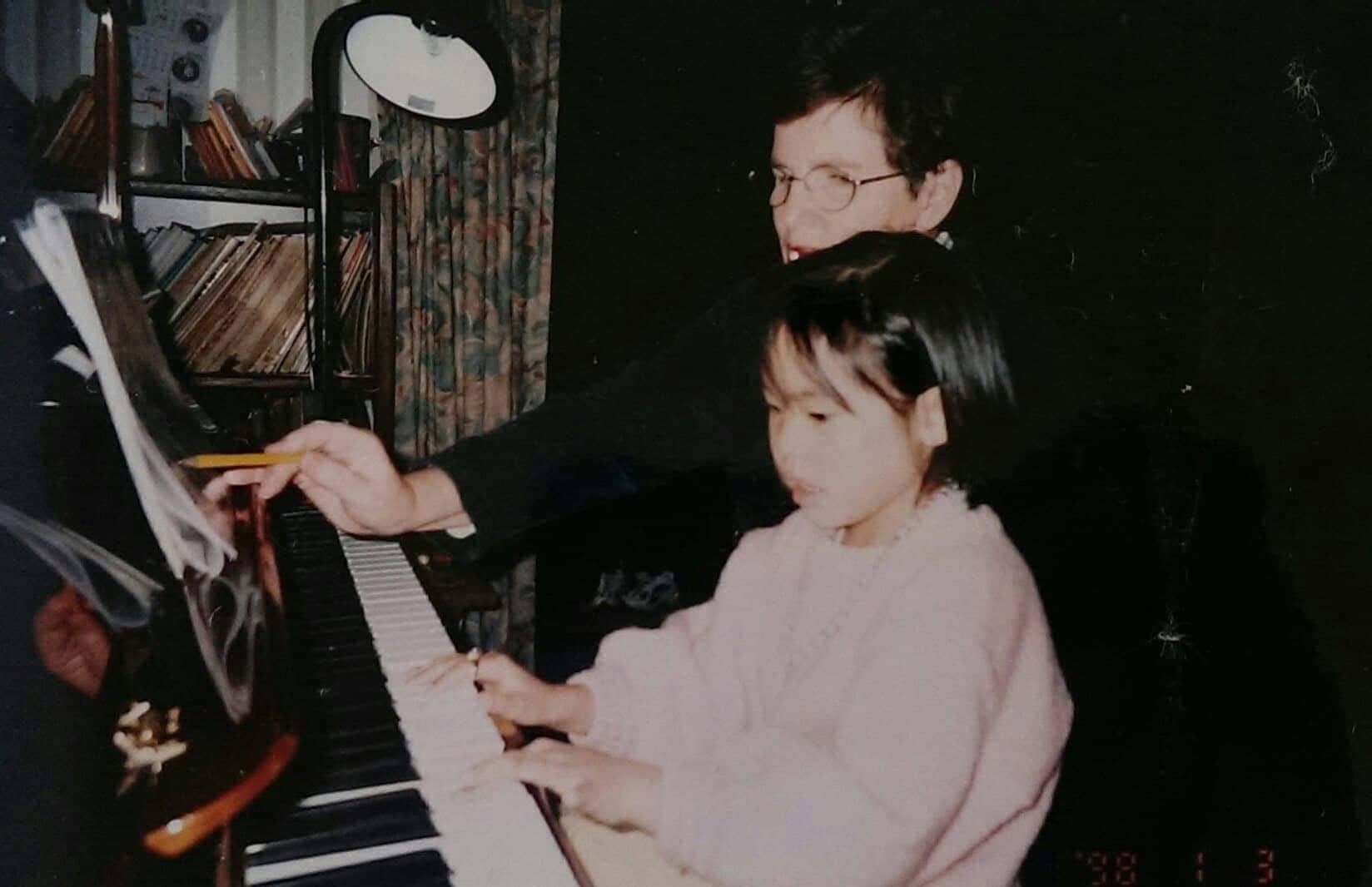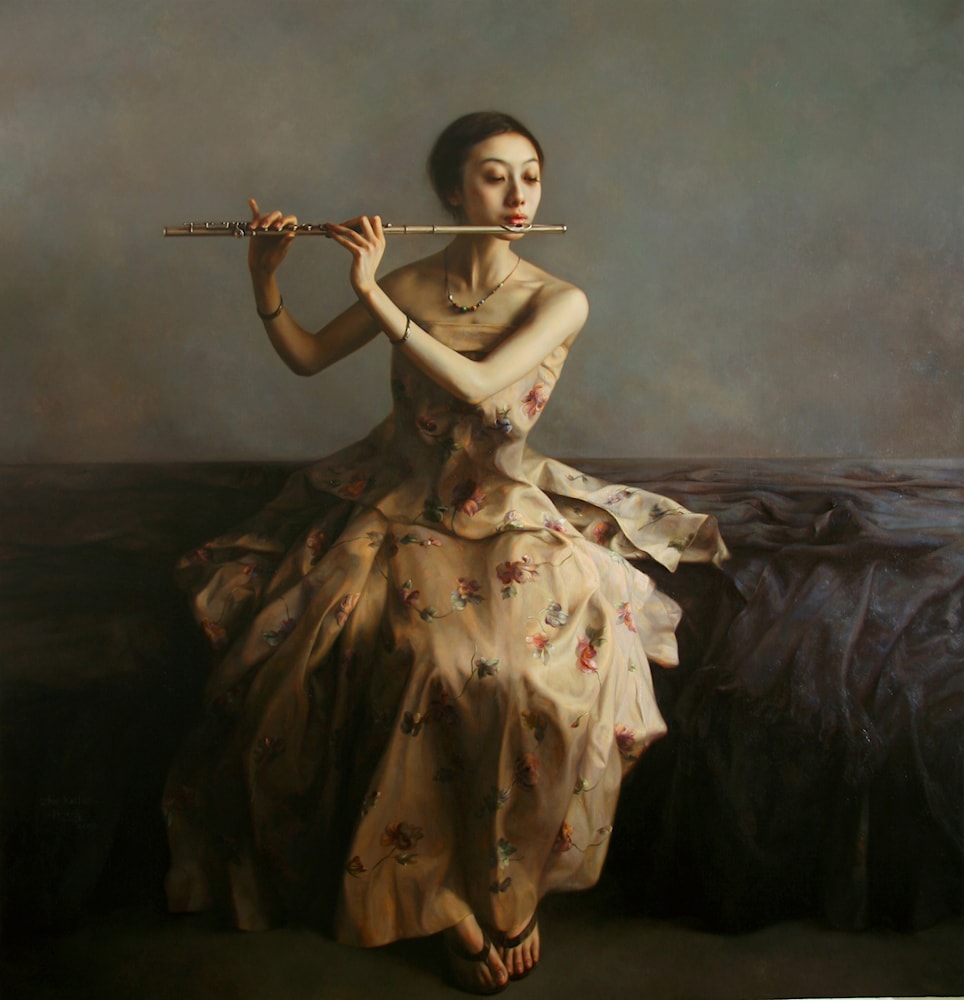
It’s fascinating to spend a significant chapter of your life completely immersed in a world, and then one day find yourself outside of it. It’s like grieving the loss of something you held dear, while also saying a bittersweet goodbye to a chapter of your life that you will always cherish. Last year, I said farewell and sold my flute, which had been with me for 15 years. I still recall the kind gentleman at the orchestral instrument store wanting to be absolutely sure I wouldn’t yearn to play it again someday. I could see a tinge of sadness in his eyes when I shared with him my musical journey.
I have avoided writing more deeply about this even in my journal because it always touches this part of my soul that unlocks so many different emotions. Music has always been my greatest companion, and on the other side, the immense pressure I gave myself became torturous in some ways. Something I think so many musicians understand is the complex, colourful and intertwined emotions that fill our inner world. There are some parts of this article that might be triggering, but perhaps relatable for those who also struggled immensely in the world of music studies.
Quiet escapism and expression. Music is a way to express yourself when you don’t have the words to express what you feel inside. It allows you to wander into a world outside of reality. The way I think of it is like watching a movie or reading a book and becoming completely immersed in that world. There is beauty in it, but also an ability to escape by putting all your focus into one thing. I didn’t particularly enjoy high school by any means, but with music, I felt like I had something to hold onto during those years. There were many reasons I wanted to go to university early, but I recall feeling like there weren’t so many opportunities at high school to further expand my music studies.
Life is filled with lessons. Yet, we can’t escape our minds, which can be both our greatest enemy and our greatest friend. I’ve found time and time again that the things we try to run away from often come back to us, or simply stay with us because the real battle is within our own minds. Although going to music school early was a wonderful accomplishment, something I am still incredibly proud of and would gladly tell others about, I can also see now that I was carrying so many emotions within myself that I was struggling to process.
Competition and favouritism. If a teacher particularly likes a certain student, they are more likely to be given opportunities to play in the school orchestra or get performances. Comparison is truly the thief of joy. There will be some teachers and classmates who criticise every aspect of your playing in the name of improvement, even though the world of art is so highly subjective in many ways. What constitutes good art can be so personal, yet it can sometimes feel as though there is a concrete standard you are constantly being measured against. Though not every teacher is this way, I am grateful for having a supportive and kind teacher during my time at the school of music.
Practice makes perfect. The pursuit of perfection is constantly prevalent in the world of classical music. It is never truly perfect. There is always room for improvement. We can repeat one small section of a piece hundreds of times just to get it right. Over time, this can make you lose the feeling of enjoyment that first drew you to music. Yet, it is often in the imperfections that music becomes so beautiful. There is something deeply human about hearing a musician make a small slip or play a wrong note, only to keep going. Those moments make the music feel real. Looking back, I wonder how much of that pursuit for perfection was pushing me forward, and how much of it was simply making me feel that I would never be enough.
True Validation comes from within. I had this dream as a child of becoming a famous musician, and with that came the desire for admiration from others and to hear the crowd applaud and affirm that I am a good musician. Despite having a genuine love for classical music, I craved validation that I wasn’t able to give myself. I was my own harshest critic. I always told myself that I could do more, that I could be more, and that if I achieved more, perhaps I would be admired. To this day, I have still kept every one of the certificates and awards I received because I am proud of those achievements, but I also see how much those accomplishments don’t define who I am as a person.
We are already worthy as we are because we exist. Looking back, I realise that the person I needed that love and acceptance from most was myself. I also remember the painful feeling I would get whenever someone asked, “Why did you give up playing?” or “Why did you drop out?” Of course, those questions were usually asked out of genuine curiosity, but they carried something much heavier for me. I had become accustomed to the respect and admiration that came with studying music. The flipside of that was that giving it up brought feelings of failure, of having given up, and of disappointing others.
Burnout, pressure and loss of passion. The first time I self-harmed and saw a counsellor was during my first year of university. I was 16 when I went to university, and when I think about that now, I realise just how young I still was. In many ways, I was still a baby. There was an isolation I had never felt before. Despite growing up on a farm, where I spent lots of time alone, I somehow felt even more isolated living in the city. There was the pressure I placed on myself, the burning desire to be successful, whatever that meant, and the constant reminder that I needed to practise for as many hours as possible. I would stand in a little box of a practice room, practising for hours, with the dream of becoming a performer.
I was so focused on becoming the person I thought I needed to be that I didn’t realise how much I was struggling simply to be the person I already was. There was this voice that I so needed to tell myself, which was, you’re already enough. We often put the most pressure on ourselves, because we’re the ones living our life. The high expectations I put on myself made me lose the enjoyment I once had in playing the flute. Because, in many ways, I felt like a failure when I didn’t achieve the grade I hoped for, or when I didn’t get the opportunity I worked for. Classical musicians spend an enormous amount of time and energy on practice, and I began to question whether I wanted to spend all my time doing this.
The harsh reality. The truth is that the dream of being a performer quickly turned into the reality that there are limited opportunities and money to be made as a musician. Becoming a top performer who earns a good income is a reality for only a small percentage of musicians. Many musicians eventually become teachers, perform part-time, or move into other industries and areas after completing their studies. I admire the determination, hard work and ambition I had as a child. I admire that I had a dream and was willing to work incredibly hard towards it. But as I continued studying music, I began to sense just how much of my entire world would need to be devoted to it if I wanted to pursue it seriously. And while I loved music deeply, there were other parts of life I was curious about and other things I wanted to explore.
What life do you truly want to live? Over the years, I have often found myself thinking about what I truly want from life. Lately, I’ve been thinking about the concept of the death of ambition. We don’t need to chase status or money simply for the sake of having more. To be happy, healthy, and content is enough. We will all die someday, and so why not live to enjoy it? I say this because I’ve been having this tormenting thought lately about the pressure of doing more, yet we have to quiet the external noise and listen to what we truly want in our hearts. No one gets to dictate what a good life looks like except ourselves.
We are constantly surrounded by messages telling us what success is supposed to look like, whether that’s more money, more recognition, more achievement, more status. If you really dig deep (but also not that deeply), a lot of those messages are made to make us more miserable. Because when I think about what matters when I’m old and grey, it’s not going to be those things society says are important. And somewhere along the way, many of us can become so consumed by the pursuit of these things that we forget to ask whether they are actually making us happy. Perhaps the death of ambition isn’t really the death of wanting anything at all. Perhaps it is the death of needing to prove that we are enough.
We will always need art. One thing I remember feeling in high school was how much science, mathematics and sports were valued, while subjects such as English, art, music and history often felt less valued by comparison. When we leave school, we can see echoes of this in our daily lives and in society more broadly. Yet the arts are deeply ingrained in our culture and are an essential part of our lives. They help shape how we understand ourselves and the world around us. They are not something separate from who we are. They are woven into us, and in some form, they exist within each and every one of us.
Although I stopped playing the flute many years ago, saying farewell, au revoir and goodbye to the flute was never truly saying goodbye to music. Music always stays with us no matter where we go. It’s the living, breathing part of our everyday lives. It’s the sounds we hear in nature, the birds singing in the early hours of the morning or the music we blast through our headphones. It’s the songs we sing out loud, the memories that bring us nostalgia, warmth and joy, and the greater meaning it brings into our lives.
“Every child is an artist. The problem is how to remain an artist once he grows up.” — Pablo Picasso
Art by Kailin Zhao
 In the film Begin Again, Keira Knightley’s character says, “Music is about ears not eyes.” It’s a simple reminder that music is meant to be felt and experienced. Just as we shouldn’t judge a book by its cover, we should value music for its story telling. Some of today’s music is incredibly catchy and I enjoy listening to some of them. But sometimes it seems like the music industry is only interested in getting as many people to listen or watch a video, rather than carry something of emotional resonance or share an important message. It makes me appreciate the timelessness of classical music, how it lingers long after the final note.